Ken Liu talks process and research, AI anxieties, and what’s next for the Julia Z series
The author goes deep on his research process and what he learned writing his latest, the sci-fi thriller All That We See or Seem

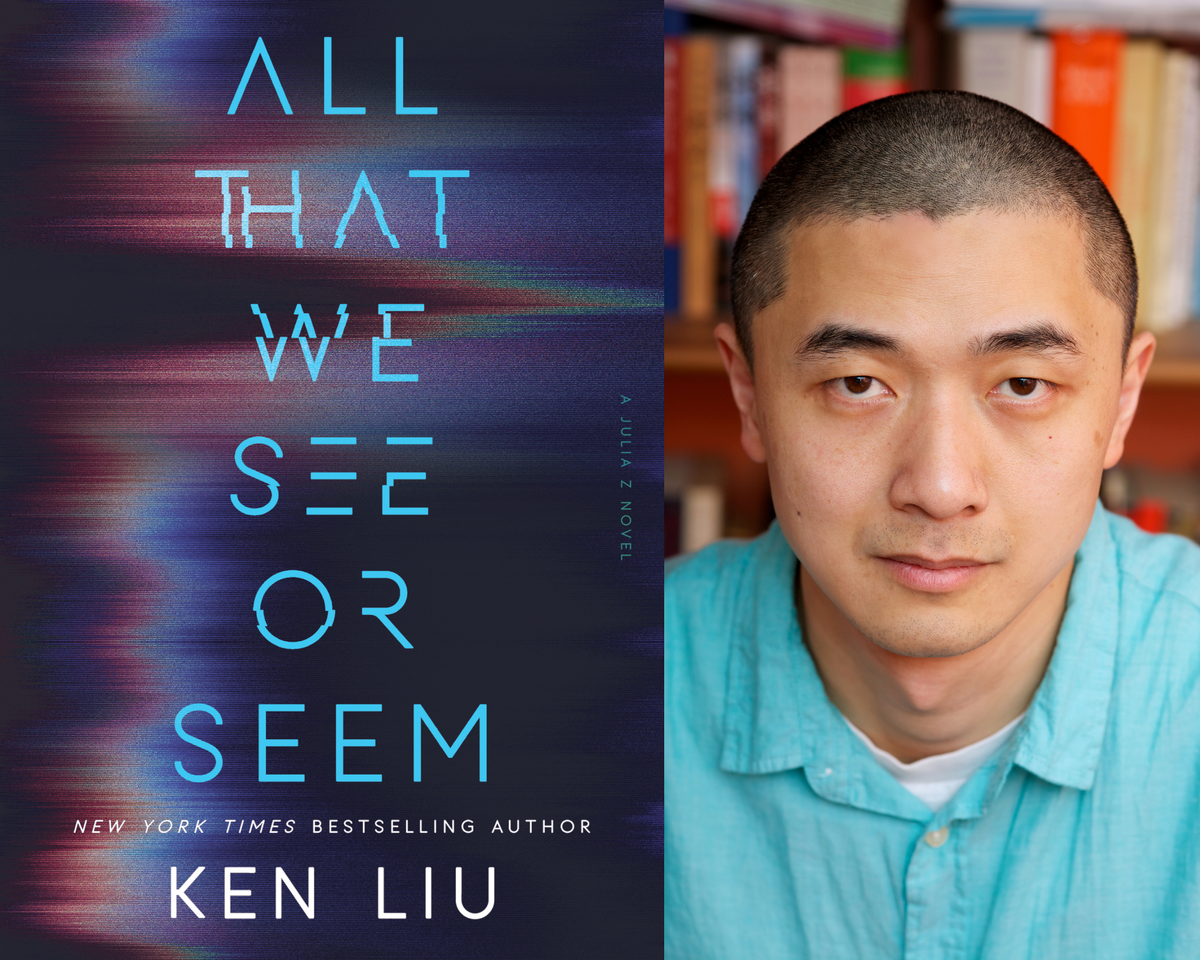
A former programmer and lawyer, Ken Liu first became well known in literary circles as a short story writer, winning awards and acclaim for his 2011 collection The Paper Menagerie, the first work of fiction to win the Nebula, Hugo, and World Fantasy Awards. In 2015, his translation of Cixin Liu’s sci-fi epic The Three-Body Problem earned another Hugo.
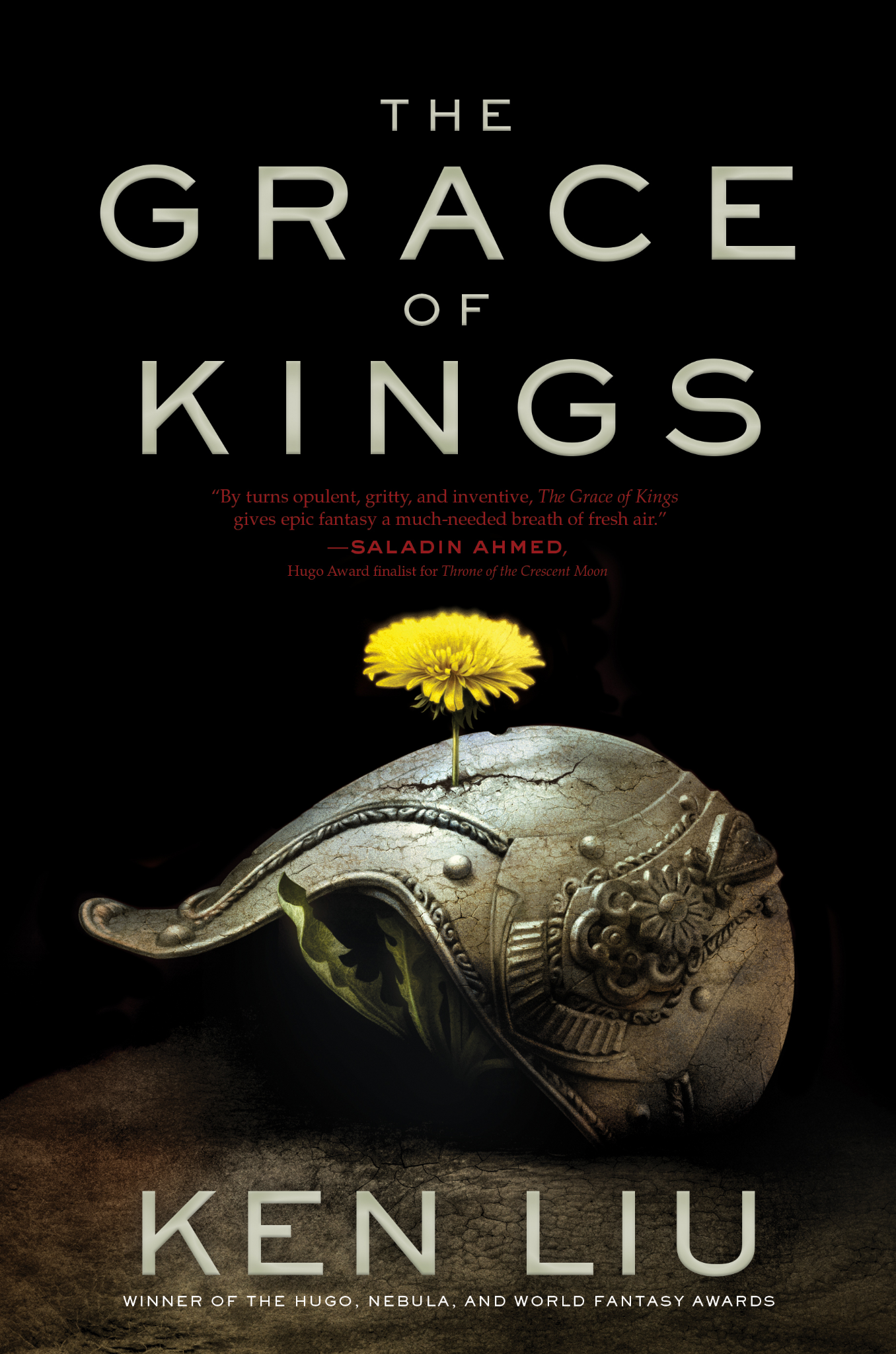
Liu first got onto my radar with his silkpunk epic fantasy series, The Dandelion Dynasty. I’m not usually a fantasy reader, but the combination of elegant prose, compelling characters, and a remarkably detailed world hooked me from the start. On a recent family beach trip, I devoured his latest book, the near-future sci-fi thriller All That We See or Seem, about a hacker solving a mystery in an increasingly AI-saturated world. I caught up with Liu after I got back, and we talked about his in-depth research process, what he learned about dreaming from writing All That We See or Seem, anxieties and opportunities with AI, his hobby of repairing old game consoles, and much more.
This interview has been lightly edited for length and clarity.
I'd love to start with some of your foundational influences in literature. When did you first start getting into literature and writing, and who were the ones that really drove you forward?
This is both easy and hard to answer. As long as I can remember, I've been reading and writing. I started out with a lot of your dime store fantasy type of stuff: Dungeons and Dragons, Star Wars – tons of Star Wars. In fact, I remember one time in college studying up all night, I was supposed to study for an exam, but instead I was reading Star Wars books all night. So that was a good time. It was awesome later on when I got to write for Star Wars. But yeah, other than those really readable, propulsive kind of fiction, the other branch of influence for me are the great classics. I loved Shakespeare, Milton, Dante. These are the epic mythological stories that sort of motivate a lot of my fiction.
That makes a lot of sense, having read a good amount of your fiction, this combination between these classical approaches to storytelling and genre fiction, which often gets short shrift in the conversation around not just literature, but really any medium of art. What is your perspective on genre fiction and why do you feel drawn to it?
Well, to me, all fiction falls into a genre or another, by which I mean just a framework for how to interpret it. Literary fiction as a genre is a fairly recent creation, and it has within it a lot of assumptions for how to interpret it. Same thing with sci-fi, fantasy, and so on, so forth. The stories that I write fall into what I think of as metaphor fiction. By that I mean it's the sort of fiction where you take some concept that we discuss in a metaphorical way and then in the fictional world, I make them literally true. So sometimes the metaphor that is literalized is done through the means of technology, sometimes it's done through magic, and sometimes it's not explained at all. And so as a matter of marketing, the story may be marketed as sci-fi, fantasy, magical realism, what have you. But fundamentally, they all fall into the same mode, which is you take some concept that we deal with metaphorically and make it real, literally true in the world of the story.
You mentioned earlier having to study for an exam, but reading Star Wars books instead. I'm curious, in your journey, the many different jobs you've had – programmer, lawyer – before being a full-time author, how has that changed your writing schedule? I’m curious when you write and what that was like when you had other jobs and what it's like now.
Yeah, it's very different now. When I was working as a lawyer, for example, the only time I had for writing was pretty much on the commuter rail as I went between home and work. Later on, as I went full-time as a writer, I was no longer subject to those constraints. I tend to write in spurts, so I would take maybe a week or so to work on a novella or something, and I would just focus on drafting it every day and then take a little break before coming back to revise it. That's kind of how I do it. I have to be very focused on the project during the drafting phase, and then I need to take a break before I go back into revising it.
As a journalist who reads fiction, I'm very interested in the research process for authors, because it's something we have in common. It's something that really drew me first to the Dandelion Dynasty, but also to All That We See or Seem, how detailed you get, especially with the engineering advances later in the novels. How do you approach researching a new topic?
I love research. It's one of the most fun aspects of being a fiction writer, that you get to basically pursue knowledge for the sake of knowledge and for fun. So a lot of times if there's a topic that I'm particularly interested in for fiction, what I tend to do is study the field overview, and then try to dive deep into specific aspects. And that usually involves reading science papers or sometimes history papers to understand the details. A lot of times it involves reading primary sources, so patents, actual engineering papers, or historical documents. And occasionally one of the more interesting forms of research I have to do is to just talk to people, experts and researchers in the field who have insights that are sometimes not necessarily captured by the publications themselves. That part is extremely fun, and I feel very lucky that I've had the help of a lot of experts who can explain to me specific things that I need to know.
For All That We See or Seem, what was the focus of your research time?
A lot. A lot of it had to do with just fundamentally how large language models work and how they are engineered, trained, constructed, and what are the various ways that people have devised to hack them. These machines are relatively simple in principle. I mean, a lot of people can give you a basic description of how they work, but in practice they're incredibly complicated. The overall superficial level of understanding that a lot of us have for how these models are built, they don't really match up with the complexities of the reality of engineering these things. There's a huge amount of stuff that happens after the initial training of the weights, and it's getting those details right that made writing that book incredibly difficult, but also fascinating, just knowing all the specific details of how these things are actually done. It's very fun.
Were there any big misconceptions that you had going into this that were corrected over the course of your research?
Yeah, quite a bit. I understood the basic principle of it, and I actually trained a few models myself, but the degree to which these complicated frontier models are constructed, the specific details of how these things are actually made, I did not understand the level of complexity that would be involved, nor did I appreciate the degree to which we don't fully understand how these models actually work. We're in one of these weird moments where we can build something and we can sort of tweak it and make it do what we want, but we don't fully understand how it's able to do it. You can sort of get a glimpse of just how complicated the stuff is by looking at the papers that are being published. A lot of times papers come out and half the machine learning community acts as though this paper is saying the most obvious thing ever, and then the other half acts like, Oh my God, how can this be? It just shows you how little consensus there really is on what these models are actually doing, and to what degree these things are exhibiting cognitive traits. I found that all incredibly fascinating and it was important for me to just try to capture the degree of confusion in the field around these models right now.
And I find that interesting with how you've talked about how it wasn't a priority for you for this near future book to be predictive. Now that the book has been published and you've been working on more in the series, has there been anything that has happened in real life that has surprised you, either because it mirrored things you were thinking of or subverted them?
Not so much surprised, although I would say that, as you point out, my concern with a book like Julia Z is to capture the mythological considerations under our anxieties about AI. And I feel like a lot of my attempt to mythologize that has proven to be right. It feels to me like after the book has come out, the discourse I hear around AI and our concerns about it do mirror what the book was trying to say. And I've been very gratified by the number of researchers and builders in the field who have come to me and said, It was really interesting reading this book because it captures something about this moment that I hadn't seen other books do, and I feel you are capturing something very important about this moment. It's always gratifying to hear that you are accurately capturing people's anxieties in the moment because as authors, as artists, that's what we try to do. We try to channel the collective unconscious, and I feel like I was able to do some of that and it's been very validating to hear from people.
I think one of the most interesting things to me is how different the various characters’ relationships to AI are. What was important to you about the different characters having different relationships with the technology?
It's very important to me to try to, again, pull us back from this moment and sort of think about this technology as a matter of mythologizing our nature as a species, right? So what do I mean by that? In the moment when we're talking about AI, I think it's very easy to be drawn into the nitty gritty of the politics of it. So you sort of take stances like are you anti-AI? Are you pro-AI? To me, these labels are not particularly useful because they're not mythological labels. These are labels about reacting to the moment. In 50 years, no one will care about these labels because they'll mean something entirely different. To me, taking a stance against a technology is meaningless. When we humans are angry about something, we're not angry about the technology, we're angry about the people behind the technology or what they're trying to do with it.
Let's just take the people who are anti-AI right now, I think it's not accurate to reduce their stance down to ‘they’re just Luddites who are reacting to advances.’ That's not what's really happening. What anti-AI anxieties really get at is this idea that we, a certain number of us who have always found meaning in the work that we do are now being told that the work we do is meaningless and that there's a certain other group of people who will use machines to displace us from that kind of meaning-making. That's what we're actually anxious about. Conversely, in terms of people who are pro-AI, they're not saying the machine itself is wonderful. Oftentimes when they're pro-AI, they're really pushing for a particular vision of how people should have power, which people should have power, et cetera.
So I find these interesting, but to me, what I want to talk about specifically is, especially those of us who are feeling anxious and disempowered, what can this technology actually do for us? Is there a way in which these machines, which are incredibly powerful and beautiful mappings of human cognition and human achievement, can be used to allow us to become more human? This is my perpetual obsession. Since the time when writing was invented as a technology, humans have been struggling with this idea: as we outsource more and more of our cognitive abilities, how do we remain more human, right? I mean, a lot of the anxieties we're now sort of directing towards AI are the same concerns that we directed towards writing as a technology, towards calculators, towards computers, towards the printing press. And I go back to these historical moments and examine how we have changed what it means to make meaning, what it meant to be creative. And I think these are instructive historical lessons. We can see how we can move forward and use these machines as a way to help us be more human, be more creative, rather than simply saying that what we do is meaningless and the machine will just babble for us all.
And that of course makes me think of the dream artistry in the book. Outside of the book, has your relationship to dreaming changed since you wrote this and since you came up with this profession?
A little bit. I have to confess that I pay attention to my dreams more, and I find them fascinating. I've started reading a little bit about dreams, both the biology of it as well as the mythological, spiritual interpretations of dreams. As I mentioned elsewhere, I do find it incredibly interesting that dreams, for the vast majority of our history as a species, have meant something very important to us. It's a mode of knowledge. It's very important to both those in power as well as the common people. And yet in the modern age, we are being told that dreams are completely irrelevant and to be ignored and we need to just forget about them. But that's just not true. If you go talk to people who are creative, many of them, most of them, I would say view dreams as incredibly important because the time when you're dreaming is one of the moments where your brain is bringing all its capacities to the solving of certain problems, not just the conscious, rational part. Turns out the mythological unconscious part is equally important to practical advances as well as just a sense of being human. So I've started to pay a lot more attention to my own dreams and to think about why am I having these dreams? Is there actually meaning to what I'm doing? Is it possible to actually use dreams as a way to access another dimension of thinking?
What have you gotten out of that experience, would you say?
I would say that there's a lot of open questions and a lot of really interesting avenues to explore. I don't think this is something that can ever be reduced to an instrument. It's not something you can reduce down to ‘Here's an essay on how to use dreams to make you rich and famous.’ That will never be the case, but the idea of using dreams so that you feel more in touch with who you are and to appreciate what it means to be a human being, I think that is very much possible.
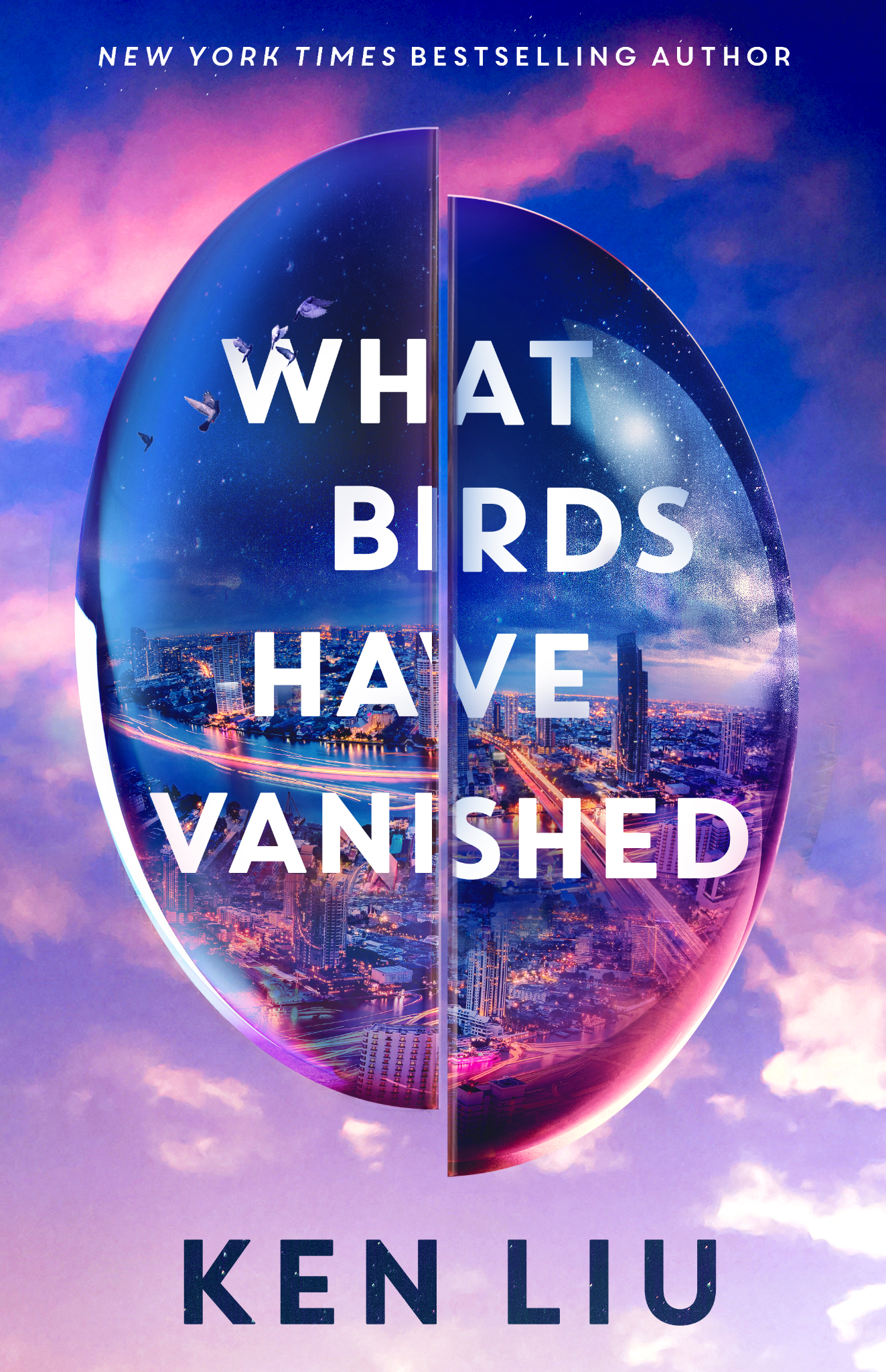
I love that. So I just saw the UK cover for book two of the Julia Z series, What Birds Have Banished. Is there anything else you can share about the book?
What Birds Have Vanished is the second book in the Julia Z series, and no, you don't actually have to have read the first book to read the second one. Each one is meant to be independent, but in this one, Julia Z goes into exploring another aspect of this technological world we're in. So the first book is about AI. The second book is very much about biohacking, or the industry for human self-improvement or bodily improvement. I think one of the taglines that the publisher is thinking about is ‘What is the price of defeating death?’ And I think that gives you a hint of where this is going.
You said in a previous interview that you would love a video game series about Julia Z in the style of Tomb Raider, which prompts two different questions for me. One, I do have to ask about the Dandelion Dynasty. The rights went to DMG Entertainment. Is there anything to share about that?
Nothing to share as people know, development of IP for film and TV is an incredibly convoluted and drawn-out process, so I am afraid I don't have any news to announce really on that front.
My other question is are you a regular gamer? What have you been playing? What do you enjoy?
I do play a lot of games. I'm somewhat old fashioned, in that I spend a lot of my time in games that are older, not necessarily current. So recently, I've been playing through some of the older Zelda games. Twilight Princess took me a very long time to finish, but I really enjoyed it, I thought it was just amazing. And the DS games, the Zelda games on the Nintendo DS, those were really fun.
I read that you also like to repair and mod old consoles. Are you still doing that? What have you been working on recently?
I haven't done it in a while, but you can see a few of them up there. [Ed. note: Ken shows off a very cool group of old consoles on the camera.] Those were the ones I modded, I think a few years back. I just recently finished a PSP. This was an old PSP that wasn't working very well, so I did a reshell and new buttons and I'm putting a new screen in. I really enjoy it. It's a lot of fun. There's something about playing these old consoles, using the physical media, that really just brings it back in a way that I think modern digital-only consoles don't quite capture.
It works a different part of your brain and I have to imagine also repairing those is working a different part of your brain than I assume you're using in the writing process.
Yeah, I think there's just a lot of beauty to these consoles. You open them up and one of the great things about these old consoles is that they still come from the era of electronics where you can still trace the circuit board and understand what they're doing. You can see, Oh, here's the speaker, here's the resistor, et cetera. And if something's not working, you can be like, Oh, okay, so here's where things are wrong. I can see that component got burned out. I just need to replace it. There's a legibility to the technology in these old consoles that's really beautiful, but with a modern MacBook or something like that, the entire system is one chip. It's very hard to understand what's going on. If it's broken, it's broken. There's not a whole lot you can do with it. So the legibility of the technology is something that I really appreciate, and I think that's one of the reasons I'm really drawn to these older devices.
We talked a bit about book two of Julia Z coming out. Is there anything else coming up next for you that you want to talk about?
Yeah, I'd love to. My next collection of short fiction, The Passing of the Dragon and Other Stories is coming out in September, and that's been just fun to work on, make the edits, and put the stories together. I'm also working on some new novellas and novelettes. I haven't actually written this much short fiction in a while, just for a number of reasons. I decided to take two months this year to just write short fiction, which I have not done in something like five years. So I should have a lot more short fiction coming out in the near future than I have been doing for a while. So that's been very exciting, to instead of working the long form, which I've done for a long time, to go back to the short form and to really just try to tell a story in less than 7,000 words. It's a really interesting challenge and a lot of fun.
Ken Liu recommends: Star Trek: The Original Series
Okay, so this is kind of a strange thing. I've been watching Star Trek: The Original Series recently. I'm a long-term fan of the franchise, but believe it or not, even though I've seen all the other series and films, I have never actually gone through the entire original series until recently. And I think they're amazing. One of the things about the original series that I don't think gets enough emphasis is that there's a particular kind of idealism that is missing in the later series. I mean, The Next Generation had a little bit of it, but after that, really it was pretty much gone. What I mean is this, the original series had this incredible idea that as humans evolve and advance, our morality would also actually advance. And the idea is that eventually we would become as gods – not merely in power, but in our moral growth and moral dimension as well. So the most powerful aliens in Star Trek represent actually more advanced moral beings. They are creatures we should aspire to.
Even in something like a Cold War metaphor where the Klingons are like the Soviet Union and the Federation is like the United States, Star Trek: The Original Series does not go and simply say, Gosh, the Soviets are evil and they need to be defeated. Rather, the original series goes to say, Actually, viewed in the grand scheme of things, both sides are just like squabbling children. Against the higher moral dimension of real peace, these are just mere ideological struggles among children. The real aspiration is to a higher plane of being. And I think that kind of idealism basically went out the window by the time of Deep Space Nine. And even in The Next Generation you only see a little bit of it. And I think that's something to be mourned. Star Trek used to have this incredibly optimistic vision of the possibility of moral improvement, and I think we have largely abandoned that. A lot of our contemporary sci-fi really does not take that stance. We have powerful beings, powerful aliens, but they turn out to be either just as morally corrupt as we are, or even worse, which is a very strange turn.
Do you have a favorite Star Trek series, while I have you on the topic?
So right now, I think the original series is very much worth looking at. So if you have not experienced it, I strongly recommend it and I think it's an incredible series. But other than that, I would have to say that I still think The Next Generation is my favorite series. It's the one that I grew up watching, so that's the one that I will always have a soft spot in my heart for.