Roguelike-like Good Luck, Have Fun, Don’t Die can’t quite complete The Perfect Run
The sci-fi comedy draws heavily from roguelike video games but ultimately falls apart

This is my monthly review for paid subscribers, with the movie voted on by you! This one was supposed to come out in August, but I’ve been very busy with work, so it’s here today instead.
I love playing roguelikes. There’s nothing quite like the variety and replayability in the genre, and the balance of strategic choices and random luck creates a satisfying tug-of-war between control and the lack of it. The feeling when everything falls just into place for The Perfect Run? Pure magic. While Good Luck, Have Fun, Don’t Die is a playful and ambitious sci-fi comedy that borrows heavily from the genre, it’s ultimately a perfect representation of an experience all-too-familiar for roguelike players: a seemingly fated run that suddenly falls off the rails.
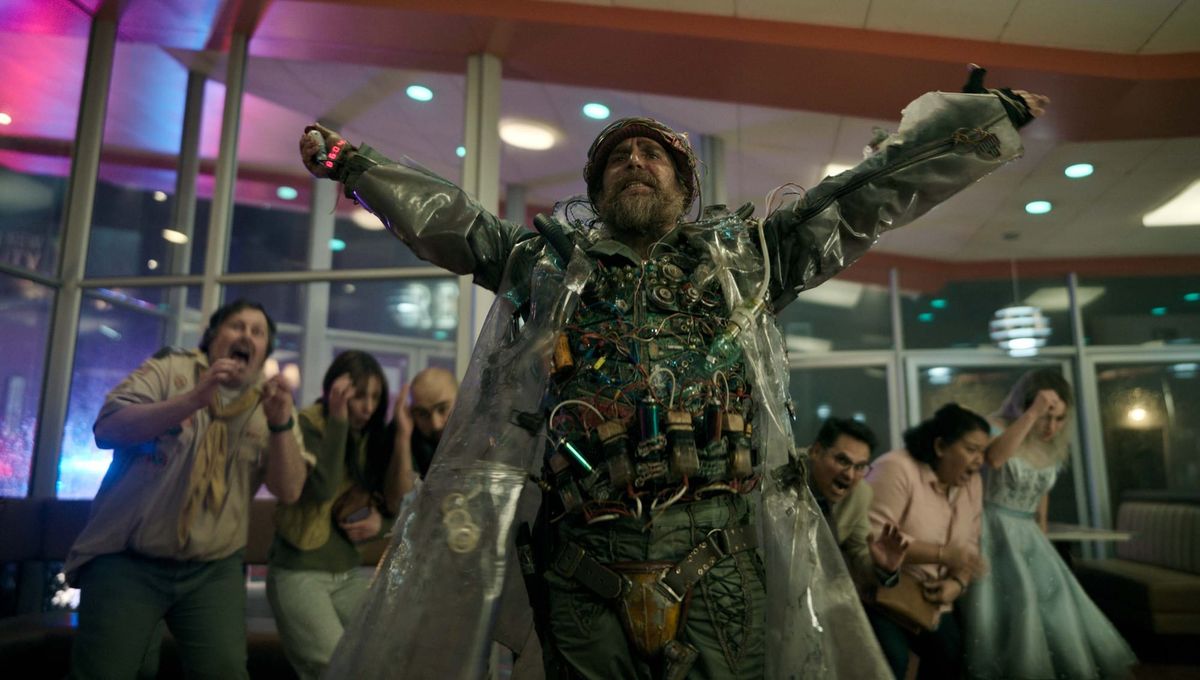
The movie opens with a disheveled man (Sam Rockwell) walking into an LA diner, claiming he’s from the future and that he’s here to stop an all-powerful AI that will destroy the world. He’s tried this over a hundred times with a bunch of different patrons, he says, and is convinced the right combination will achieve success. Rockwell is hilarious and magnetic while holding court in the diner, and it’s easy to imagine enjoying a 90-minute version of the movie contained in that space, solely following his character trying to convince the diners that he is who he says he is.
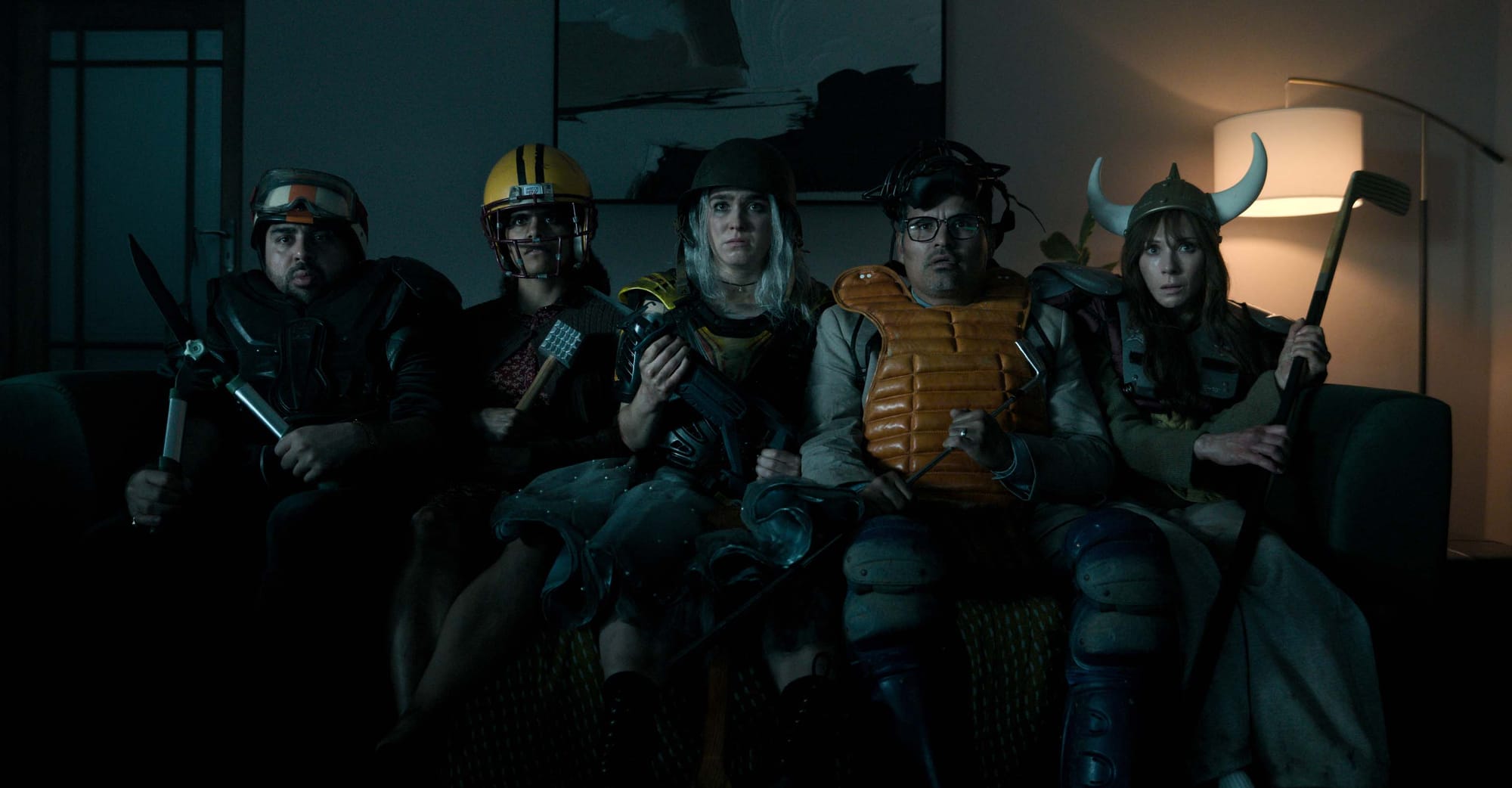
Instead, GLHFDD goes for a mostly successful partial vignette structure, interspersing the anchor story of Rockwell’s character with short sci-fi stories about the party members he forcibly recruits from the diner. There’s Mark (Michael Peña) and Janet (Zazie Beetz), a couple who work as teachers and have to deal with some kids who are very attached to their phones. There’s Susan (Juno Temple), a grieving mother approached by a company who offers something too good to be true (the highlight vignette of the movie). There’s Ingrid (Haley Lu Richardson), a young woman with a mysterious illness recently spurned by a lover. Each of these stories feel like miniature Black Mirror episodes (with highs and lows, appropriately) while also connecting to each other, working in tandem with the anchor story to deepen the stakes, characters, and the dystopic near-future where these existing problems have been amplified.