Rodrigo Valdes charted his own path to breakout Mexican action hit Vengeance
The director talks about intentionally making a Mexican action movie without cartels, real life getting in the way of his vision, and what he hopes is next for Mexico’s burgeoning action movie scene

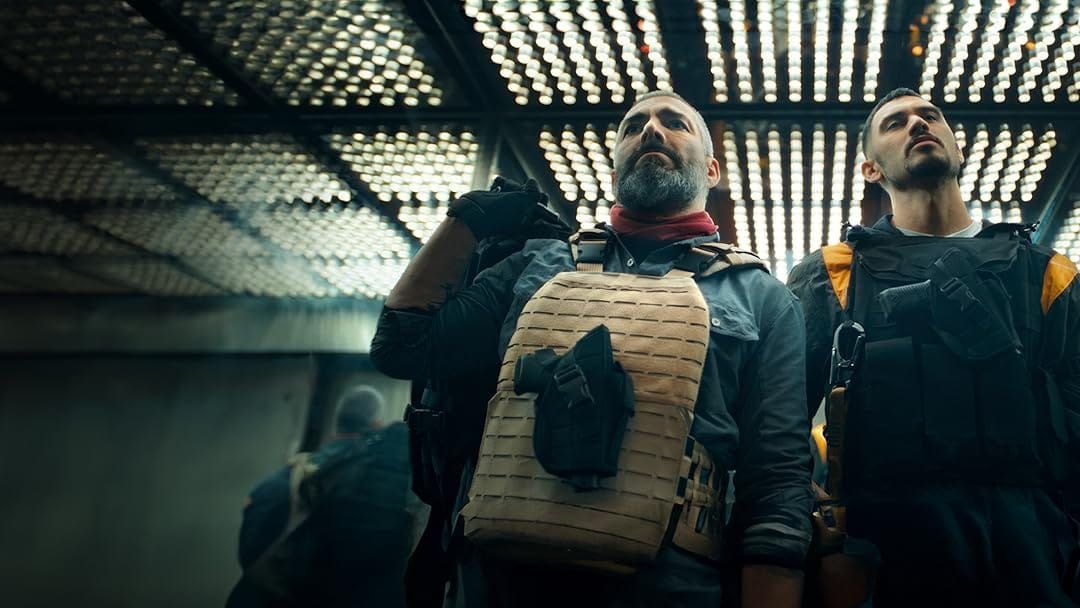
For a nation with a rich cinema history and a constant presence as a setting for Hollywood action movies, Mexico has had surprisingly few notable action films over the years. But in back-to-back years, we’ve seen breakout action hits from Mexico, potentially signaling a new era for the genre in the nation.
Rodrigo Valdes is the director of the most recent of these films, the 2026 military action thriller Vengeance. An award-winning music video and commercial director, Valdes first made a name in action circles when he was the second unit director in 2024’s Beverly Hills Cop: Axel F. The director followed that up with Vengeance, his feature debut, which premiered in theaters in Mexico in February and landed on Prime in April, becoming a streaming hit for action fans.
I spoke to Valdes about his background, making a bold bet on himself as a teenager, how commercials and music videos set him up for success in features, the influences of The Raid and Jackie Chan on his action design, telling a Mexican action story without cartels, and how the reaction to Vengeance from Mexican audiences was complicated by real world events.
This interview has been lightly edited for length and clarity.

I’d love to learn more about your background. Where did it all start for you with movies and filmmaking?
I can’t remember wanting to do anything else. From a very young age, I just wanted to do film, and I was completely in love with film and images. I was very influenced by Spielberg and those types of films in the 80s and 90s.
My father used to be in the business. He did post-production. Even though I didn’t understand what he did completely, there was a familiarity where I felt like it was close and that I could do it. I’d been to a couple of soundstages and shoots from a very young age, so it felt plausible.
As I grew older, I started to hang out on more film sets. He used to do film-to-video transfers and color corrections and VFX. I started to kind of understand how it all was made, in a way, but I was still very naive – I was in my early teens and just kind of playing around with the tools. And then the opportunity came to go to New York and do a couple of film courses at the New York Film Academy right after high school.
It was incredible. I was 19 years old and just in New York by myself with a bunch of other kids. The New York Film Academy was great, because the first day they would tell you This is a 16mm camera, let’s take it apart and see how it works. Day two was This is a light meter, this is how it works. By Friday, we were shooting. Every week, we would do little exercises like a poker match, to figure out the eyelines and who’s talking to who, figuring out how focus works, but in a very tangible, filmic way, where you also understood how to prepare and how to conceptualize. You would think all week about what you were going to shoot on Friday. And then on Monday, you’d have it developed and you would see it.
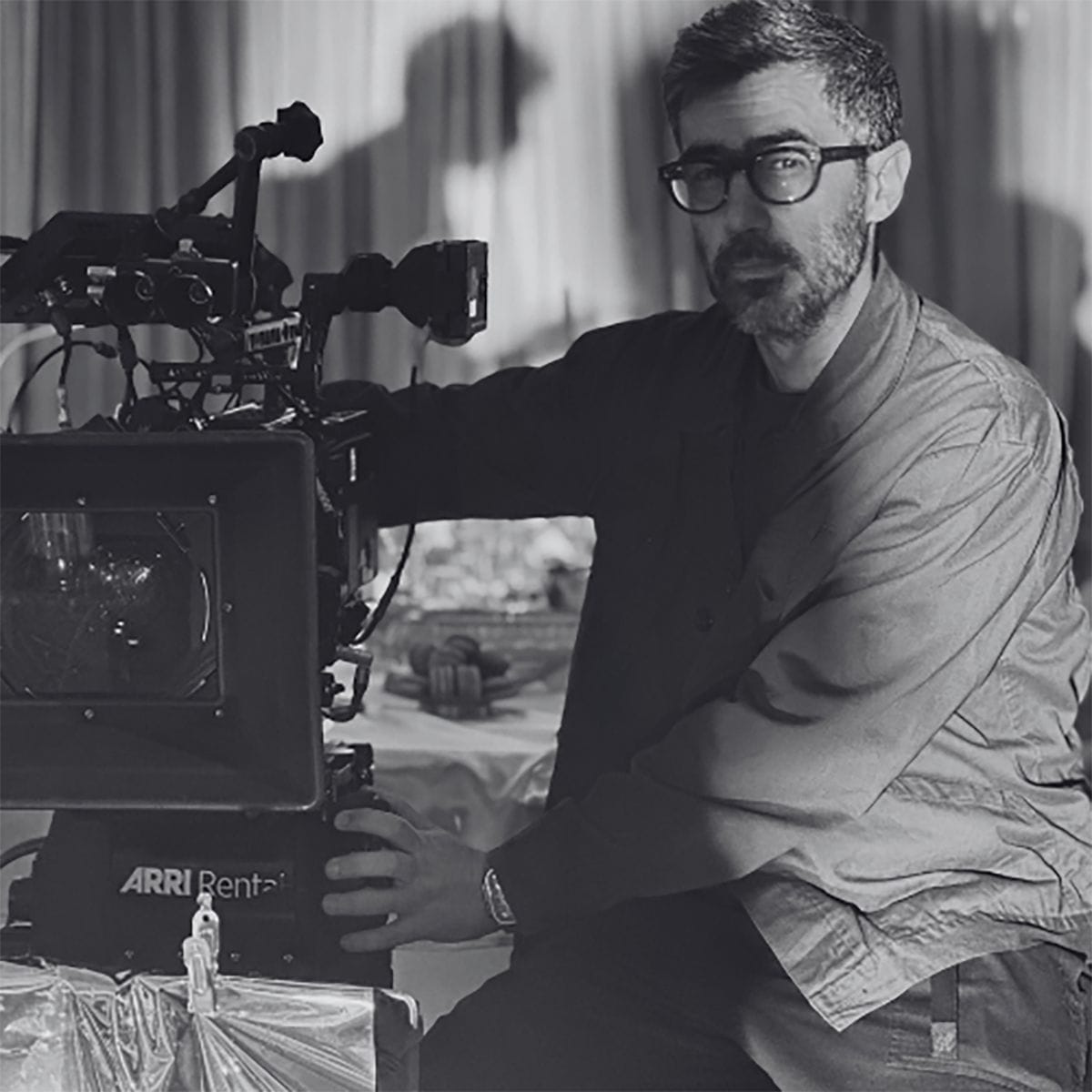
And then I came back to Mexico into film studies, like proper school. But I was just overstimulated and overspoiled by that experience [in New York]. I was like What is this? This sucks. I had some good teachers, but me and my friends decided this is not for us. A semester in, the four of us dropped out and convinced our parents to give us the tuition money to shoot films. Which is incredible. All our parents said yes.
We did the same kind of format, but in a semester. Each semester, one of us would shoot a film, another would DP, another would produce, and we would just rotate jobs. We had a little bit of money, and we’d buy film and we’d just shoot these short films. We did this for like a year or so, and then a friend of mine in another school learned what we were doing and invited us to produce his short film.
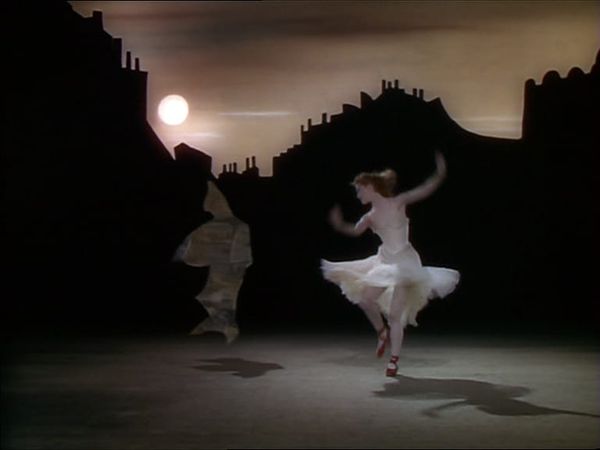
That became, soon enough, a production company. I was 22 or 23. We started doing shitty corporate videos, and we even did some promos for politicians in weird parts of Mexico. They were really bad jobs, but we were shooting video. Then we started doing music videos. The first music video we did was huge and won a bunch of awards – a Latin Grammy, a Latin VMA. It was a black-and-white music video about a kid who fell in love. He drew illustrations in his notebook that were really cool, and they caught life and started to take over around them and that also invaded everything with color. That was our first truly professional work. Then, suddenly, everyone wanted a music video from us, so we started doing music videos. Then we were doing commercials for quite a while.
What sticks out to me about that story is obviously that your parents agreed to it, but also that you all were so young and so disciplined to stick to your schedule. Where do you think that came from?
We were very hardworking from the beginning. Crazy hardworking, to a point where when we started being successful, we were burnt out in a way. We would sleep at the office. For that music video, we recruited friends – we had to do manual, frame-by-frame roto. So every one of our friends who knew how to use Photoshop, we recruited them, we got a bunch of computers, and did a farm of painting frames, roto-ing, and doing shapes. We got a hotel close to the office, and we would do rounds. It was a crazy dynamic of working. We did that for a few years. But we were just hungry to do stuff, and we were young, and we did whatever it took.
What did you take from the commercials and music videos you worked on and apply to your feature film work?
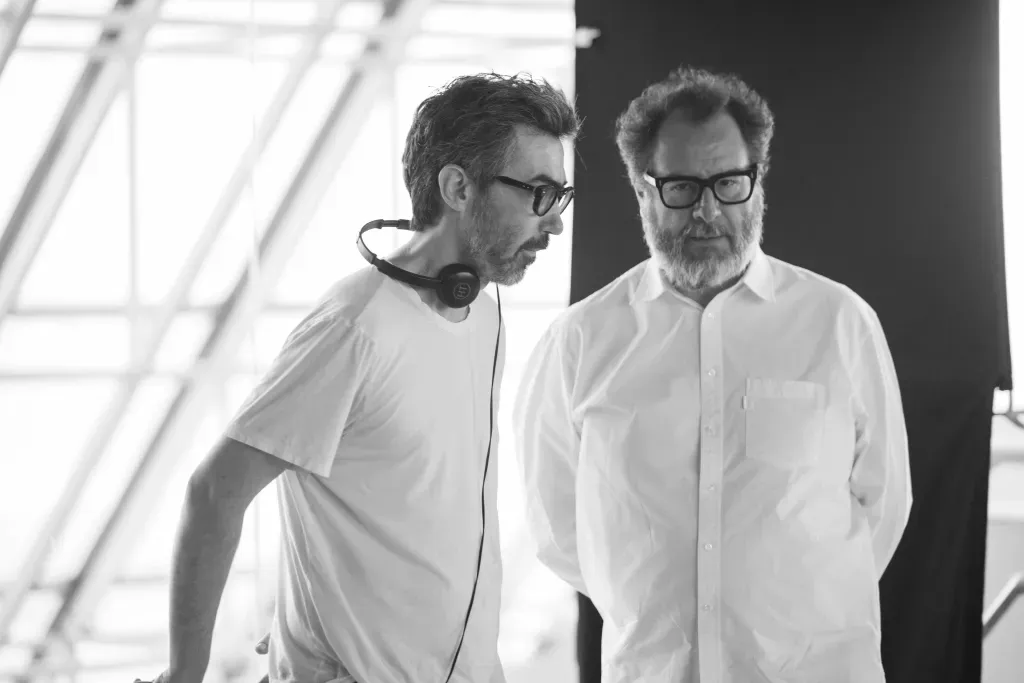
The good thing about commercials is you use all the tools that exist, basically. I’ve had a lot of experience working with all the equipment you can think of, and with incredible crew, incredible DPs, Oscar-winning DPs. Sitting next to them and developing – even just for a few days – you get to shoot with the people who have the most experience in the world. Same thing with stunt coordinators, even with actors, because sometimes you have a celebrity talent. It didn’t start that way, but it built up to that. And also you understand how to plan for a complicated day. It kind of demystifies the whole process a little bit. Keeping an audience engaged for two hours or so [in a feature], that’s a completely different thing, but in terms of shooting, editing, putting it together and creating a feeling and a moment, it’s the best school you can think of. Not that it’s a guarantee, but you learn how to do it for sure.
You jumped into features when you shot the second unit for Beverly Hills Cop: Axel F. How did that come about?
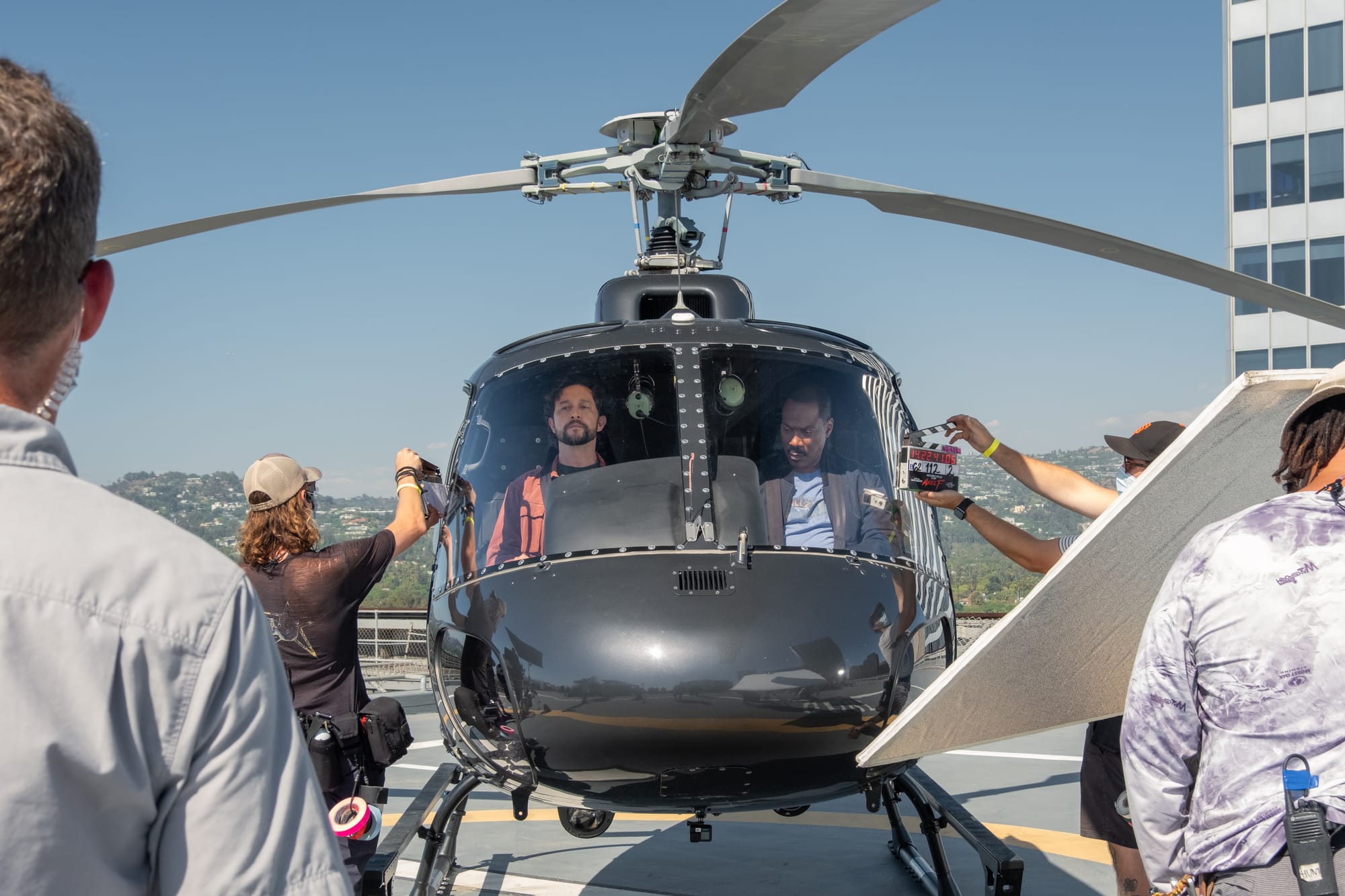
The director is Mark Molloy, who also comes from commercials. He’s the hardest working person I know, I have so much respect for him. I’d seen his work for many, many years. There was a Toyota commercial he did about a kid rolling a bike that is so incredible.
Then he got the opportunity to do Beverly Hills Cop. Jerry Bruckheimer found him through some commercial that he did, and then he was looking for a second unit director, but his schedule was completely insane. It was the first film that he was making, and it was massive. He didn’t want the traditional route of a second unit director, which is usually a stunt coordinator, more of a craftsman. And there are some incredibly talented people that do second unit. But he wanted to feel safe, in a place where he knew. There were a couple of sequences that needed casting, and the arriving to Beverly Hills sequence needed a little bit of conceptualization. He had some ideas, and some basic scenes, but somebody had to actually execute, from the casting, to the scouting, everything. He didn’t want somebody to just execute what he was doing, he wanted somebody to co-develop it.
Funny enough, the DP that he ended up working with was a mutual friend, Eduard Grau, who I’ve worked with quite a bit. He’s a good friend, and a super amazing DP. He recommended me, and we hit it off right away. Then the producers had to see my work, and Jerry had to see my work. It helped that I’d done some commercials that were pretty action-packed, and I was also developing Vengeance by then, but I hadn’t shot it yet. They took a shot and it worked out great.
I’m super proud of what I shot, and talking about demystifying the process, it was also a moment where I saw Hollywood. Everyone’s at the top of their game, but I also realized Wait, I can do this. These are the same people I would normally work with, and I have something to offer. I have ways of solving a day. It gave me a lot of confidence through the process.
Were there specific things you took from Axel F that directly applied to Vengeance that you maybe didn’t expect from your time on music videos and commercials?
Mostly working with other people for extended periods of time. I’ve run a company before, and I’ve had co-workers for many years, but it’s different when it’s day-in, day-out all day with someone, and doing something that’s so intense.
Also decision making, doing something on the spot is something that I learned a lot from Mark. Whenever he had an idea, he would act on it immediately, or whenever there was something floating around on an e-mail chain, he would jump on it. If he saw something that could become either an idea or a problem, he would address it immediately, which was great. But on the flip side of that, letting things mature sometimes. It’s a marathon, so not losing your shit. If something happens, you let it mature, you let it marinate a bit, and you know that you’re in it for the long run. In a commercial, if you lose a location, it’s Oh shit. You don’t sleep. Not that in a movie you also wouldn’t sleep, but it’s a different approach where you know you can solve it in various different ways throughout the process. You’re prepping for months or shooting for months, so you can be a bit more mature about how you handle things.
Is the action genre an intended focus of your career or a coincidence?
You kind of find your voice in the process and find what you’re good at in the process. I’ve always loved action films. I see everything – the more cerebral ones, the popcorn movies – and I get a kick out of them. I didn’t imagine myself trying to do action. That wasn’t my goal 10 years ago, but I am good at it and I do love it. Something that you start to figure out is Wait, I’m good at this. I can actually contribute something here.
It happened with humor at the same time. In my commercial work, I started doing a lot of humor, and that really was because I met some really funny creatives and I did one funny spot that was very successful, and now I was the guy for funny spots. And that didn’t mean I was like a comedian, or really talented, it just happened. I started approaching humor more on a visual, storytelling approach, and not just shooting funny dialogue.
It’s a mix of you being ready and being good at something, but also opportunities that start showing up. That crafts your vision. But the vision doesn’t always come first.
Speaking of the process, what was the genesis for the idea behind Vengeance, and how did the project ultimately come together?
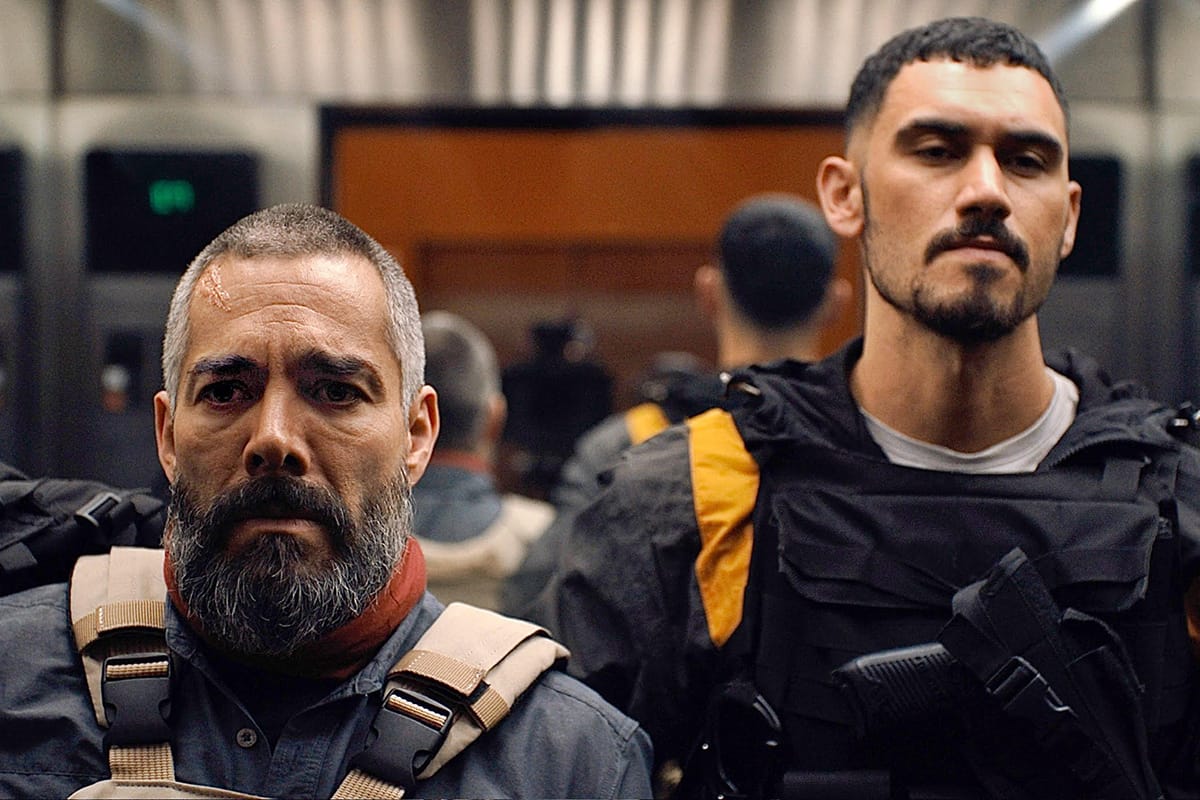
I was in this production company owned by Diego Luna and Gael Garcia. They brought me to LA with Pablo Cruz, who produced the film. The whole thing about me coming to LA was helping them do commercials, and they would help me develop a feature film. We said “Let’s do a Mexican action film, like a full-blown, non-stop, beginning to end action film.”
Mexico obviously has had film heritage forever, and has done many many kinds of things, but for action it’s mostly serviced the Man of Fires, that type of stuff, but never really local action for our own audience. We were thinking of The Raid, non-stop, crazy.
Then we found this IP by Yalun Tu and Matt Bosack, American writers that had an idea of an ex-Marine who loses everything, post-traumatic stress type of thing, having shitty jobs, and wins the lottery. He starts spending like crazy and his family gets kidnapped and now he doesn’t have his family but he has all this money, so he says I’m going to use all this money to fuck shit up and get my family back. We went to Amazon and they were super stoked, and then it kind of got lost in development land for a while. We had a first draft, and it wasn’t quite working. People changed on the streamer’s side, it got kind of lost in the weeds for a bit.
And then Javiera [Balmaceda], who is the head of creative for Amazon in the LatAm, Australia, and Canada markets, found this and re-invigorated the whole process. That was 2023, and another writer came in. I changed companies. Then we reunited in 2023 to make this film. Gael and Diego were not a part of it anymore but Pablo was.
It was a long process, and the story itself shifted. I wasn’t really happy with the script, to be honest, but I was like It’s getting close to a green light, everybody’s happy. I don’t love it but I don’t want to mess with the process too much. Once it’s ready, I’ll dive in. The producer was always giving me that advice – just hold off, you have to be patient. Then suddenly, December 26th, 2023, literally one day after Christmas, they go It’s done, green light. I was still celebrating Christmas and then suddenly we start prep in one month. I was like Wait, the script is not ready! And prep for an action film is so important, crewing up for this kind of film is so important and very tricky. I worked on the script for a month, which was very little, and I reengineered all the action scenes, to make them a little bit more surprising and unexpected.
That was one of the things that stuck out to me the most about the action design in Vengeance – I was constantly surprised by moments in the choreography and the way objects were used within it. How did you want the action to feel, and how did you think about the usage of the environment in the action?
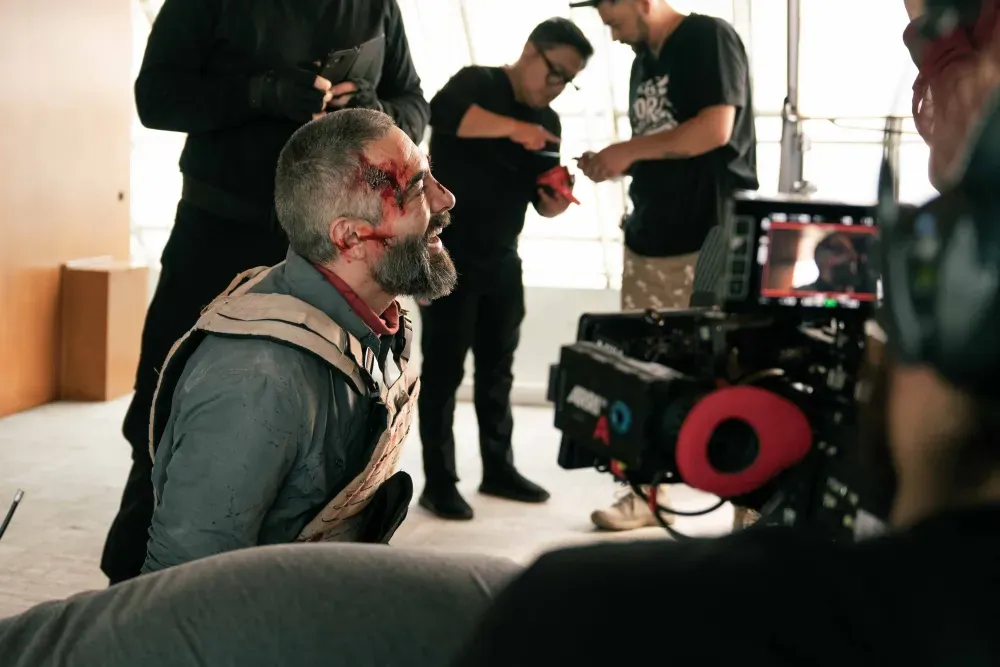
On the first meeting with the stunt coordinator [Hristov Diyan], it kind of freaked him out – he’s a great stunt coordinator, and great action designer – but I was talking to him about Jackie Chan. Not because of tone, but because of how he uses space, how he uses objects, how he uses the environment around him for action. The evolution, the narrative within an action sequence, and how it portrays character as well.
I didn’t want to do a Mexican action film that had to do with drug dealers or drugs. Everything is about cartels. I wanted to steer away from that, and also I didn’t just want people shooting at each other from afar. I wanted these guys to be more intimate. I love Bourne and how they fuck each other up and use the space and use the book to choke the other guy. Jackie Chan is a big influence. I love The Raid and how it develops in the martial arts, but a big influence for me on this one was The Yellow Sea, a Korean film that uses knives and martial arts in a way that almost elevates the action into poetry.
For me, I got freaked out. Mexico is violent. It’s a violent country. I didn’t want to portray the violence in such a realistic way. It became a much more serious movie if I went 100% trying to make it too real. I wanted to detach the audience. The stakes should be real, the characters should feel realistic, but at the same time I wanted the action to feel slightly elevated.
What has the reaction been like from Mexican audiences?
It’s out of our control, in a way, and that was a big learning experience. Once the film becomes the public’s, the reaction and the way the public interprets it is so unexpected and an animal of its own.
At the beginning I was so intrigued by the military in Mexico. It hasn’t been portrayed that much. The Marines started to become more present. Within Mexico, the perception of the military is they’re not very sophisticated or not very prepared. But for the Marines, the level of training they have is quite extraordinary. And then the special forces, they’re trained by the best, they’re like Navy Seals, pretty much. At the beginning, the villains in the film were just bad guys in the world. I wanted to set it within the military, because I was interested in that world.
It adds so much texture to the film, to have this layer of corruption.
Exactly. And I just love that we were in there. Architecturally, it’s super interesting, the Mexican military school is like this brutalist, crazy Dune place. Corruption is a different thing for me, because there’s a lot of corrupt cops and government, but the military, at that moment, felt like it was a little more protected from that in Mexico. This was 2020, 2021.
Between 2021 and 2025, the perception of the military in Mexico changed so much, because Mexico started to get militarized. The President of Mexico started to use them to take over the ports and the airports. They almost became our federal police because the federal police was a little bit corrupt. The perception changed so much in the making of this film.
We shot this in 2024, but it was delayed because of Amazon and their timelines and competition, and also because we got the opportunity to go theatrical. And while the film got pushed, another film came out, which was Counterattack, that was also about special forces military in Mexico, and I was like Oh shit. It’s a very different film, it’s a different type of action, and one of the stars is also in our film. Kudos to them, it was a big hit as well.
That was the first kind of Oh shit. The second was the military was thought of in a different way. And then the week we came out in theaters in late February, there was crazy violence. People weren’t coming out, people weren’t going out that week. Suddenly, it became way more relevant and way more of a portrait of the city, which wasn’t my intention ever. For me, I wanted to detach. Obviously, there’s a relationship, but for me it’s a film to go and have fun and have some things that feel very real, but it’s not a documentary, it’s not supposed to be a hardcore portrait of Mexico. I should have gone a little bit further, but I did stylize the world a little bit more, in the action, in the day-for-night blueish moments. For me, it was more like a graphic novel, even the title sequence. It was like “What happens if Sicario goes pulp?”
Now, when it came out on streaming, people forgot about it a bit more, and people were able to see it more as entertainment, and it travelled so much all over the world, which has been great. It did incredibly well. But when it was in theaters, it was a mirror of what was happening in Mexico, but I was interested in the pulp element more.
What are your hopes for the future of Mexican action cinema and Mexican cinema?
Mexico has so much to offer, and a unique point of view. There’s some fun elements that Mexico has to offer, and some superstitious elements. It has its own culture and point of view, and a film heritage and a film vocabulary that is very unique. My hope is that Mexico can export more films, and create films that can be consumed across the world more and more. Of different genres, and not just indie cinema – we know we’ve been great at that, and some auteurs and some DPs that have done incredibly well – but that we can actually export stories that a universal audience can go to. The French do it very well, and the Koreans do it very well. That’s my hope: That film continues to grow and that there's more industry, but also that we can share those stories with other places and influence other places. That’s at least where my mind is at.
What’s next for you?
I’m developing a couple of projects of my own. One is a coming-of-age monster movie with some crazy action set pieces, but it’s a very grounded monster movie. I’m very excited about that. I’m also working on another thriller. I’m reading scripts and co-developing with a couple of production companies here.
I’m working on doing English language films, some of them with Mexican stories, just to make the sandbox a bit bigger without going crazy or anything, and making films more people can see. That’s my goal. I want to make films that make people excited to go to the theatre or turn on the TV. I’m so proud of Vengeance, and the success it’s had, and the opportunities it’s brought, and now I just want to go a little bit bigger, a little bit madder, and with more confidence.

Rodrigo Valdes recommends: The Yellow Sea and Widow’s Bay
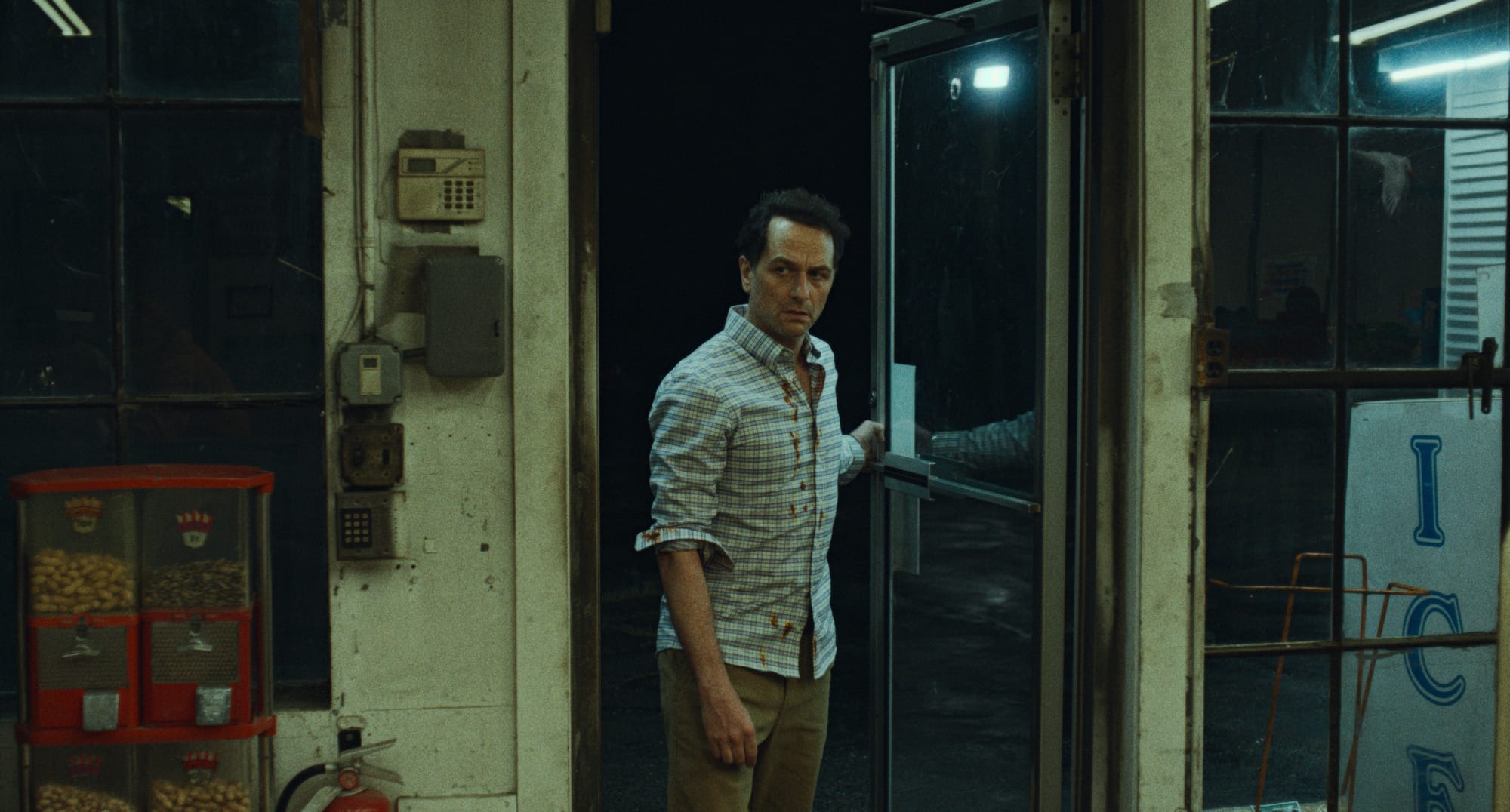
The Yellow Sea is such an incredible film and just the perfect balance between good characters, a story that you can relate to, and incredible, fun and outrageous set pieces.
Widow’s Bay, I’ve been watching and just getting a kick out of. Hito Murai is incredible, I really love his work and how he’s taking something that feels familiar and [making it fresh]. We need more of that. It should be in everybody’s conversation. It’s so well done: It’s scary, it’s funny, it’s entertaining, it’s so well-performed, it looks beautiful. It’s a whole world and I’m in awe of the craftsmanship.