The Butcher’s Blade review: Thematically resonant AND the best wet towel fight I've ever seen
Action movies contain multitudes

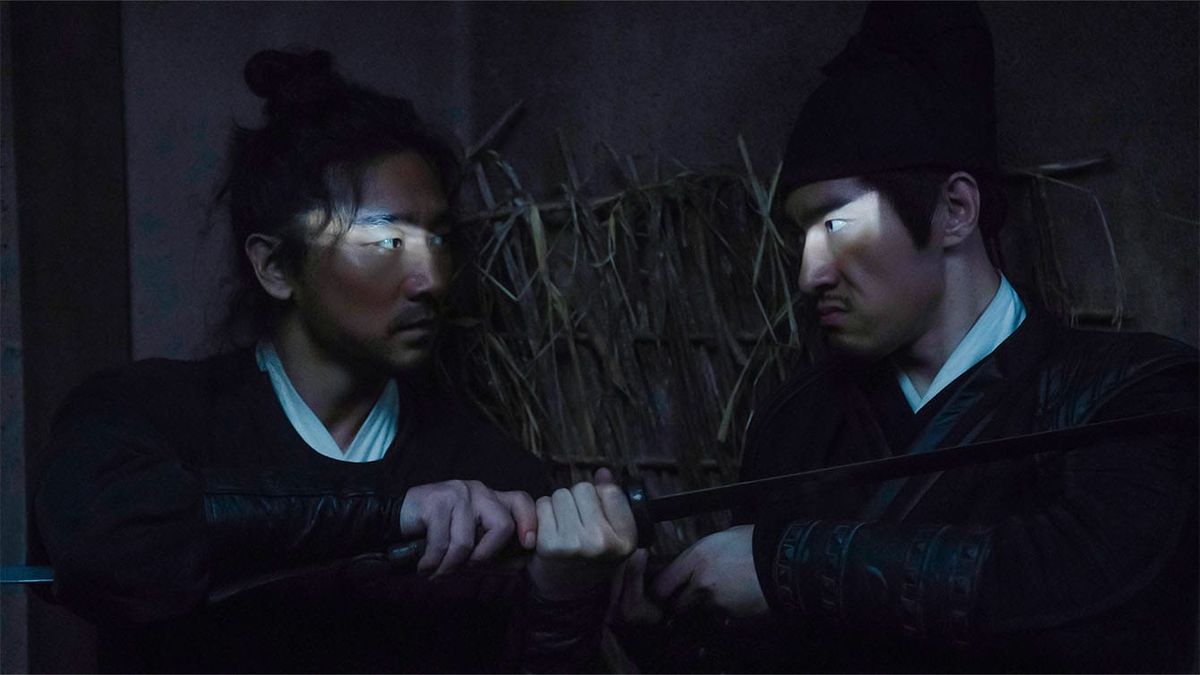
As I continue comparing trends and new releases in my Back in Action 1991 project, it’s become increasingly clear China has completely lapped the United States when it comes to the quantity and quality of new direct-to-video action movies. The latest banger is The Butcher’s Blade, released in China in January and now out for digital rental/purchase in the US. It’s an exciting, action-packed thriller about the difficulties of doing good deeds within an authoritative system, and how corrupt officials breed distrust in institutions.
Xue Buyi (Chinese DTV staple Liu Fengchao) is a principled, low-ranking constable during the Song Dynasty. He wants to use his position to do good, but it seems impossible: He witnesses bribes accepted by his superiors pretty much everywhere he goes, and when he does try to step in and do a good deed, he’s either blamed for what happened or his attempts to help go unappreciated. Corruption runs deep in these institutions, and he’s accused of having a “sentimental mercy.”
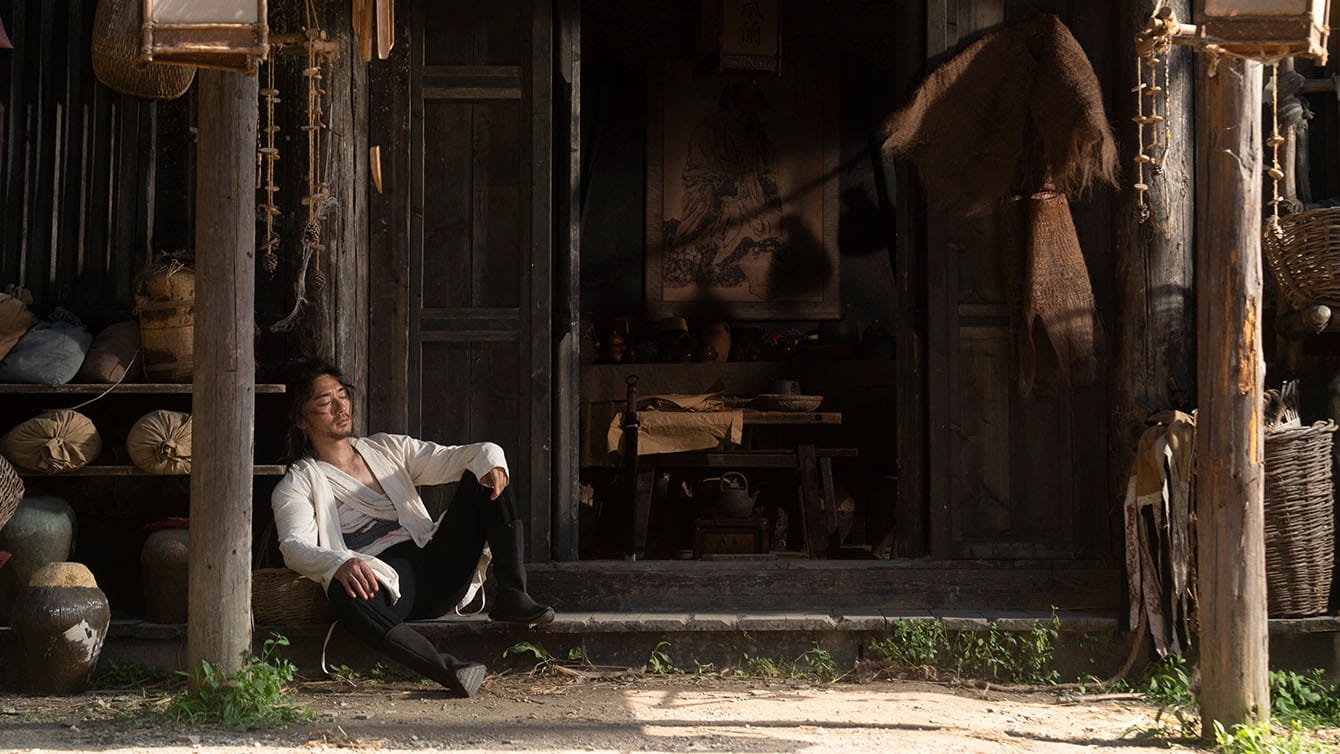
While guarding the treasury, Xue is framed for the theft of disaster relief funds before being rescued by his former mentor Huang Shining (Chunyu Shanshan), a judicial official. Butcher’s Blade then pivots into a semi-detective thriller as Xue and his friend Li Zhen (Yuan Fufu) investigate the robbery.
During this high-profile investigation, Xue is repeatedly pressured to ignore various wrongdoings and apply sadistic methods to find answers. He gives in sometimes, using his position to attempt to mete out some personal justice (with mixed results) and even reluctantly accepting a bribe to sate his hungry stomach. In The Butcher’s Blade, it’s impossible to do good within a corrupt system, and impossible to make a survivable living outside of it. Xue has to learn how to fight for himself and refuse the temptation to “get past the hurdle in [his] heart.”
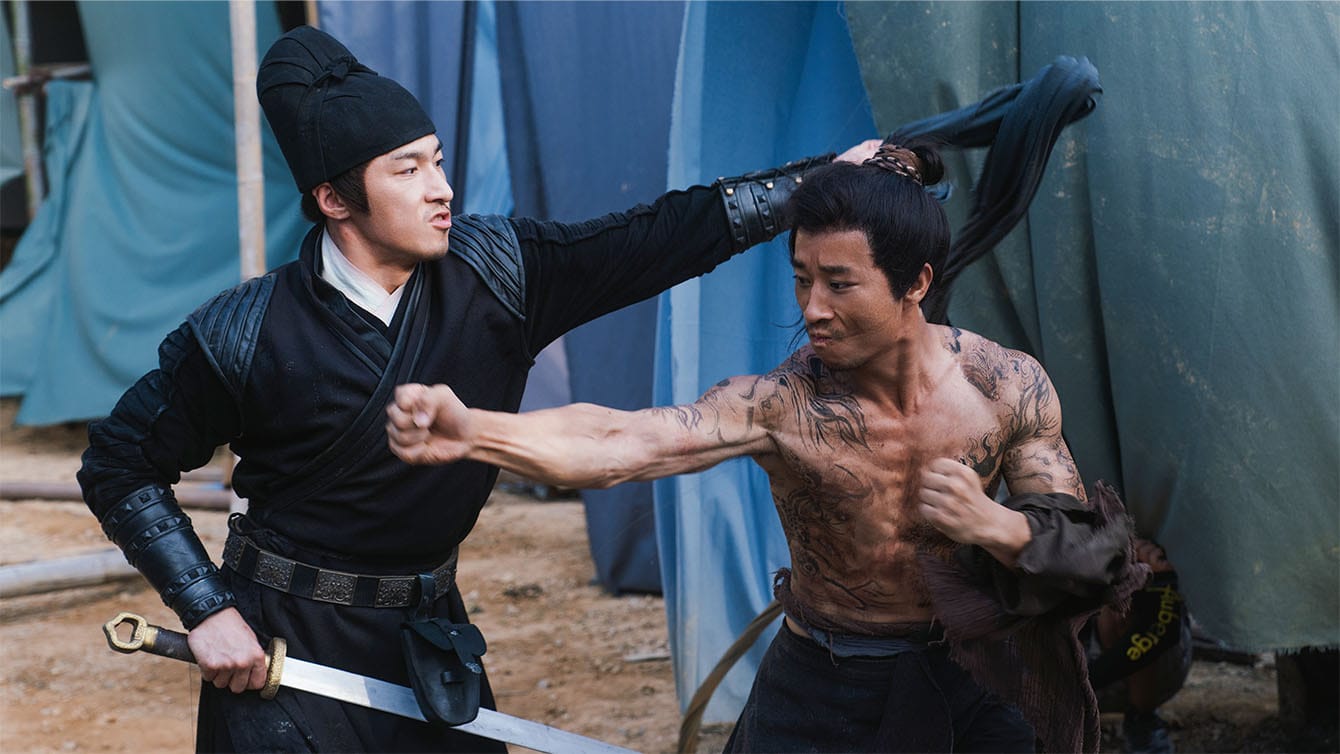
Even with hard-hitting themes, a DTV action movie isn’t worth much without strong action. Luckily, The Butcher’s Blade delivers on that front, too. The movie is executive produced by Qin Pengfei, who emerged in recent years as the foremost filmmaker in the Chinese DTV action space. Regular Qin collaborator and action director Xiaogui Du (Eye for an Eye 2) uses strong, motivated camera movement that accentuates the impacts of the blows, and The Butcher’s Blade is filled with variety in the action. Many different weapon types, locations, and fighters are on display – a tight-quarters fight in the treasury with an acrobatic fighter, an explosive showdown in a fireworks shop, a brawl at a dye shop that repurposes a comedic trope (the wet towel fight) into something dramatic and suspenseful. Fights in The Butcher’s Blade are filled with high-paced displays of acrobatics, martial skill, and creative use of the environments, and the action design plays into the movie’s themes (a final blow literally toppling an entire structure, imprisoning the villain within it, is a satisfyingly on-the-nose touch).
The great action and thematic throughline that connects it to its characters make The Butcher’s Blade a cohesive action thriller and one of the standout new action movies of 2026, DTV or not. It’s refreshing to watch a modern Chinese movie that is so cynical towards authority, institutions, state violence, and following the rules because they are rules. The Butcher’s Blade is about upholding justice, our eroding faith in institutions, and the justifications the state is willing to invent to commit atrocities. Also, it’s got the best wet towel fight I’ve ever seen. Action movies contain multitudes.