Jason Trost talks charting his own path with DIY genre movies
“I think that’s success as an artist, knowing that every time I’m on set, or just in my apartment, I’m creating something no one’s done before.”

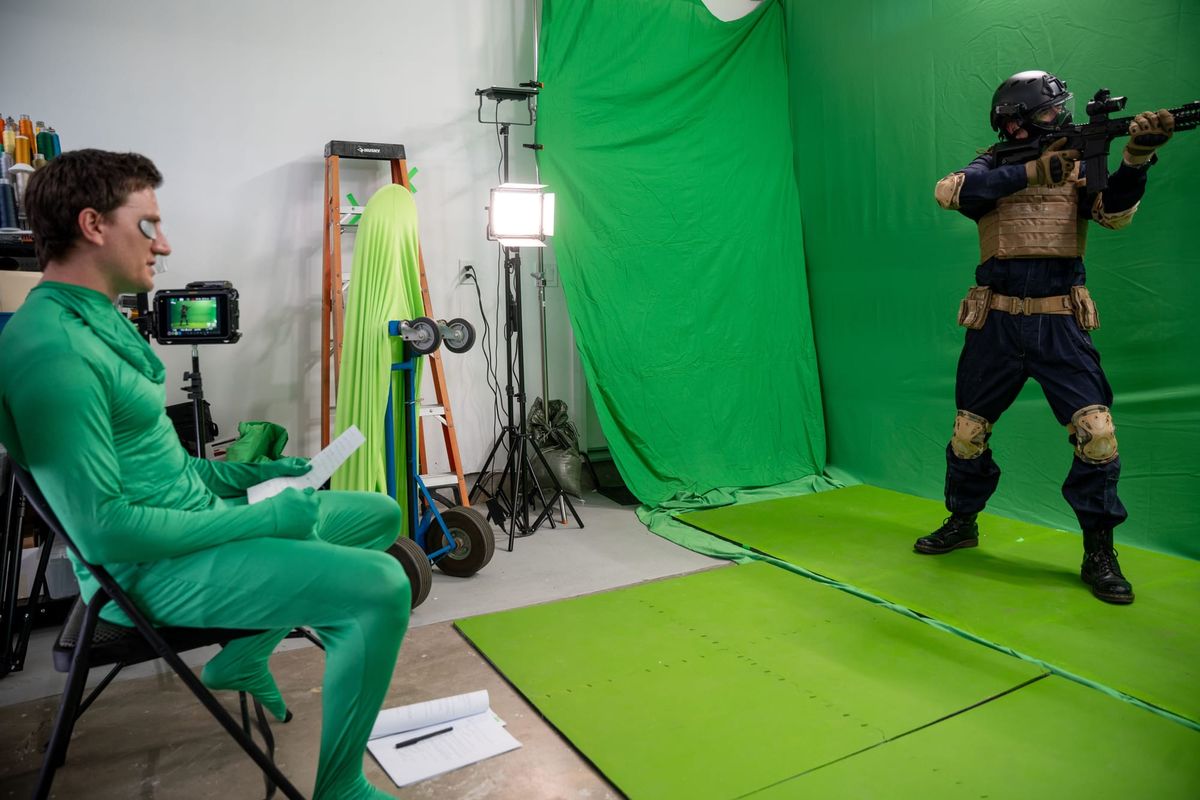
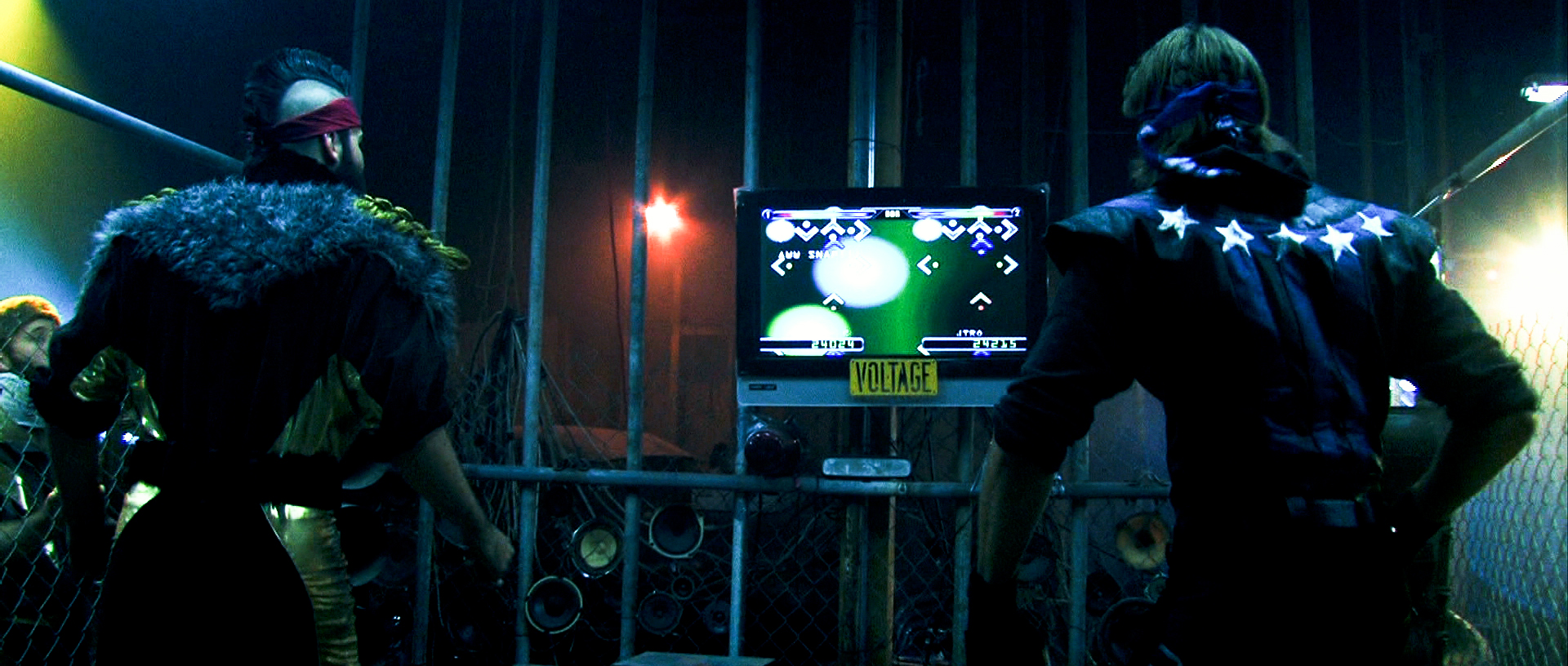
In 2011, Jason Trost and his brother Brandon burst onto the indie genre filmmaking scene with their gleefully wacky genre mash-up The FP, about gangs who settle disputes through a Dance Dance Revolution-style music game. The movie got a great reception at South by Southwest, and then became a sleeper hit on Netflix for emerging genre enthusiasts like myself.
The Trost brothers grew up surrounded by movies. Their father Ron is an accomplished special effects artist whose credits include the original Mortal Kombat, Scream 2, Rushmore, and Popstar: Never Stop Never Stopping. Jason and Brandon were extras in quite a few of their fathers’ movies growing up (Shaquille O’Neal even helped a small Jason dunk on the set of Kazaam), and those early experiences on set helped form the brothers’ careers.
But since The FP, Jason and Brandon have taken vastly different paths. Brandon is one of the foremost cinematographers in major Hollywood comedies, with recent credits that include The Naked Gun, Sonic the Hedgehog 3, and the upcoming Coyote vs. Acme. Jason has stuck to his low-budget DIY roots, making and starring in three additional FP movies and a whole host of other creative genre projects.
Most recently, Jason released The Waves of Madness, a side-scrolling horror movie inspired by games like Resident Evil. Jason wears a lot of hats in his productions – he directed, wrote, starred (alongside his wife Tallay Wickham), and built almost every aspect of Waves of Madness. It was one of my favorite under-sung movies of 2024, and Trost is now working on a follow-up of sorts – Castellum of Blood, inspired by the Castlevania games and expected to release later this year. I spoke with Jason about his career to this point, the heavy influence of video games on his work, and what success means as an artist.
This interview has been lightly edited for length and clarity.

You grew up in a movie-oriented household. What do you remember most from that time, and how did it impact your work and your approach?
I remember learning from a young age that I didn't want to do things the way big movies were done. Most people start their career bright-eyed. All that wool was ripped from my eye quite early because I was growing up on sets with my dad, hanging out in the effects truck like, This is boring, this is very corporate, why are there 1000 people here basically sitting around and bitching at the coffee table? I get it, but I remember thinking you can do this a lot smaller and make weirder stuff.
I was always making little G.I. Joe movies on my dad's effects truck with a VHS camera back then. Now in my new movie, I've just been kitbashing lots of action figures and puppeting them and making them move. It's kind of this full circle moment where I've gotten all of these skills and experiences over the years, and now I'm the 10-year-old kid in the effects truck again.
But yeah, it shaped everything. I think it cut out 20 years of bullshit that a lot of people stumble through. I mean, granted, I also did some of that as well, being like, Oh, maybe I can make a difference. Maybe I can do it corporately, too. No, it's like going to Vegas and expecting to win. The house always wins. The studios always win.
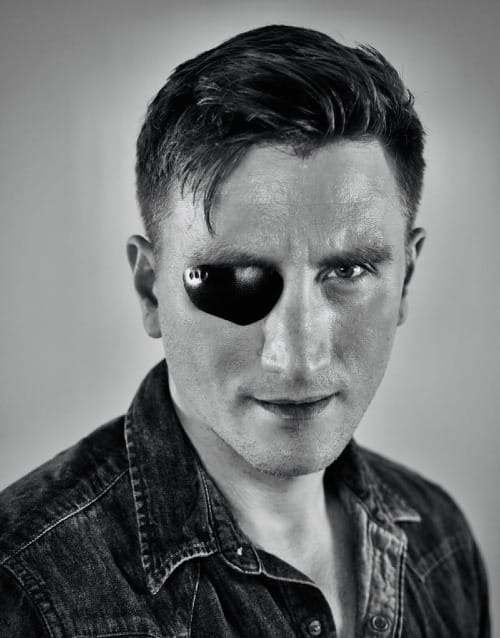
I find the difference between your path and your brother’s very interesting, after growing up in the same environment and starting your career as collaborators. You’ve previously said “He's a contractor. I'm an architect [...] I'd rather be making things than waiting for permission to maybe make something someday that I don't even really like.” This connects to a common question for artists – what does it mean to be successful as an artist?
Now that I’m approaching 40 here any day – any month now, let’s not age myself too much – it’s something I think about quite a bit. Most people in the film business gauge it as Well, you’re not Brad Pitt, so you’re not successful. If you look at it on paper, [most people] have probably never heard of me.
But I’ve written and directed 10 films or so. Many have been in theaters, they’ve played around the world – technically, if you’re just looking at a computer prompt on the spreadsheet, I’ve checked all the boxes of what I thought would be success when I was younger. But I think success at the end of the day is just being fulfilled. Did you actually try to climb the mountain and do it? Who cares how you did it! Did you climb in the right way? Doesn't matter. You got to the top.
Have you felt that with your recent projects?
Definitely, especially with Waves of Madness and now Castellum of Blood, which is even crazier. I’ve reached that point where I’m like No one can make what I’m making, for better or worse. For whatever reason, I am the only person who can make these, and these things will not exist without me.
I think that’s success as an artist, knowing that every time I’m on set, or just in my apartment, I’m creating something no one’s done before. You’re sitting there, breaking new ground, like how the hell do we do this? Because no one knows, because you haven’t done it yet. And I think that’s success for me – as opposed to this world of bland sameness that we’re in at the moment with creativity – to be able to do something new. Do I love it? Can only I make it? Have I never seen it before? If the answers are yes, I go in and I make it. I feel like we’re losing a lot of that with movies. There are a lot of technologies and things now where you can make things on your own. Sure, it’s never going to look as big as something that’s $300 million, but at least you can entertain someone and try to do something different.
With so much overly corporate art and the encroachment of AI, I find myself gravitating towards more DIY-type stuff where you can see the human input and the seams. How do you think about all that?
I’ve never been a fan of focus group cinema as it is, where a bunch of people go around and soften the edges until it’s for everyone, but then it’s for no one. Just a boring thing you’d see, like art on the wall at Applebee’s. You don’t even look at it, it serves the purpose: There’s something on the wall. But that’s what makes money and that's what is safe for them. It doesn’t really do anything for me.
I feel like we’ve lost our voices. You go back and watch these studio movies in the ‘80s and ‘90s and everything has a voice. You can tell somebody made this. We’ve kind of been watching AI movies for the past 10 years even without the technology. The level of focus grouping, it’s like human AI, making the most middle-of-the-road thing possible. And then if something gets 90 percent on Rotten Tomatoes, it’s like Oh my god, it’s a masterpiece. No, that just means 90 percent of people thought it was okay. It’s all so forgettable, we have this burn-after-use product. I’ll go and see some new movie, and people ask me the next day what it was about and I don’t really remember. It’s usually a hodgepodge of a bunch of things I’ve already seen a million times better.
I think there’s two sides of AI. There’s the slop generation prompt things people are doing. That’s worrying. I don’t know if you’ve ever tried to go into ChatGPT and say “write me a good movie,” but it’s never gonna work. It’s always gonna be bullshit, it’s always gonna suck.
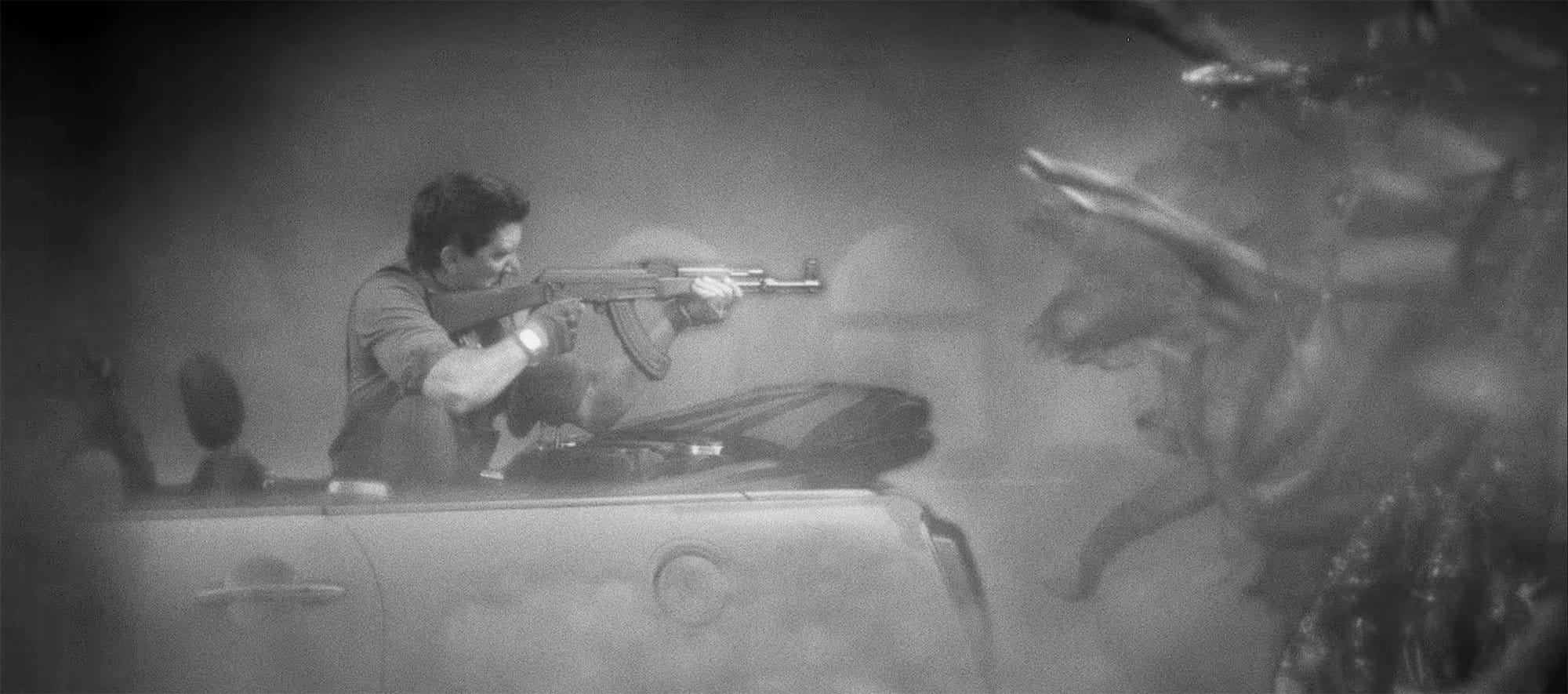
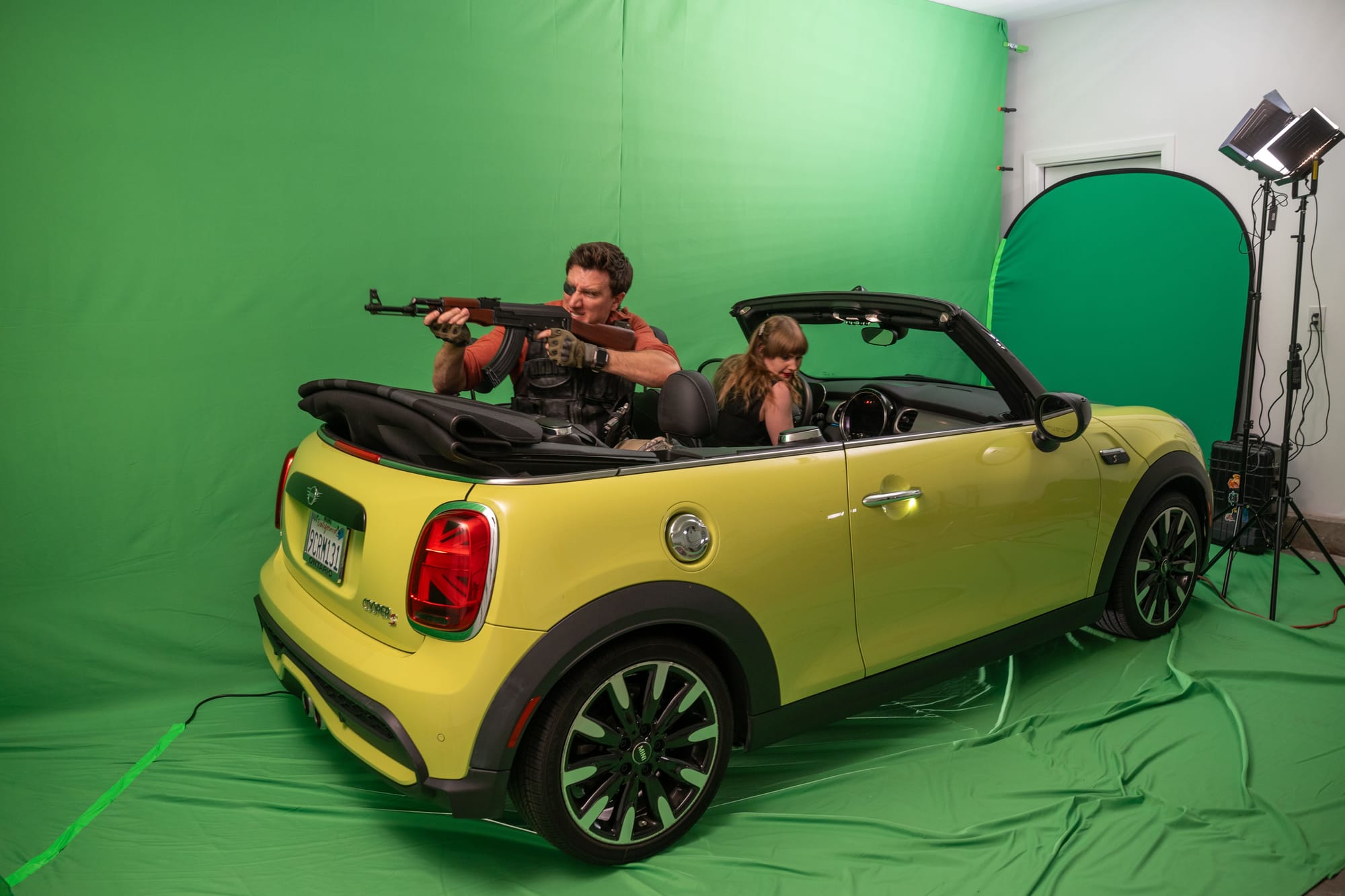
But then there’s the other side of AI, where it can give your DIY and independent people access to tools. But you have to give it something [real]. Like rotoscoping this [filmed sequence] out is going to take me a week, but with AI I can do it in five minutes better than the week I would spend doing it. There’s stuff where it can take all that bloat work out. It’s shortening the gap between the DIY guys and the studio guys. It’s still me that’s putting all that together, but it shortcuts things to where I can get back to making the movie now.
I think the studios will ultimately use it for evil, to where they can just prompt their way out of things. When it’s AI tak[ing] over everything, obviously that is total garbage. It’s one of those things we have to learn how to get a hold on it and become its master. As long as you keep the human element. If I’m making all the decisions, giving it my rendering of a creature that I built and took pictures of with the right lighting, but asking it to make it take two steps and it does it exactly how I would have but saved me a week, that’s pretty cool. But if you’re like make me a monster from scratch and make it do this, that’s horse shit. The business people are just going to want to use it as cheaply as they are now, and it’s our job as creatives and artists to learn how to keep the creativity and bring the art to it, keep it as a tool and not let it get sentient, I suppose.
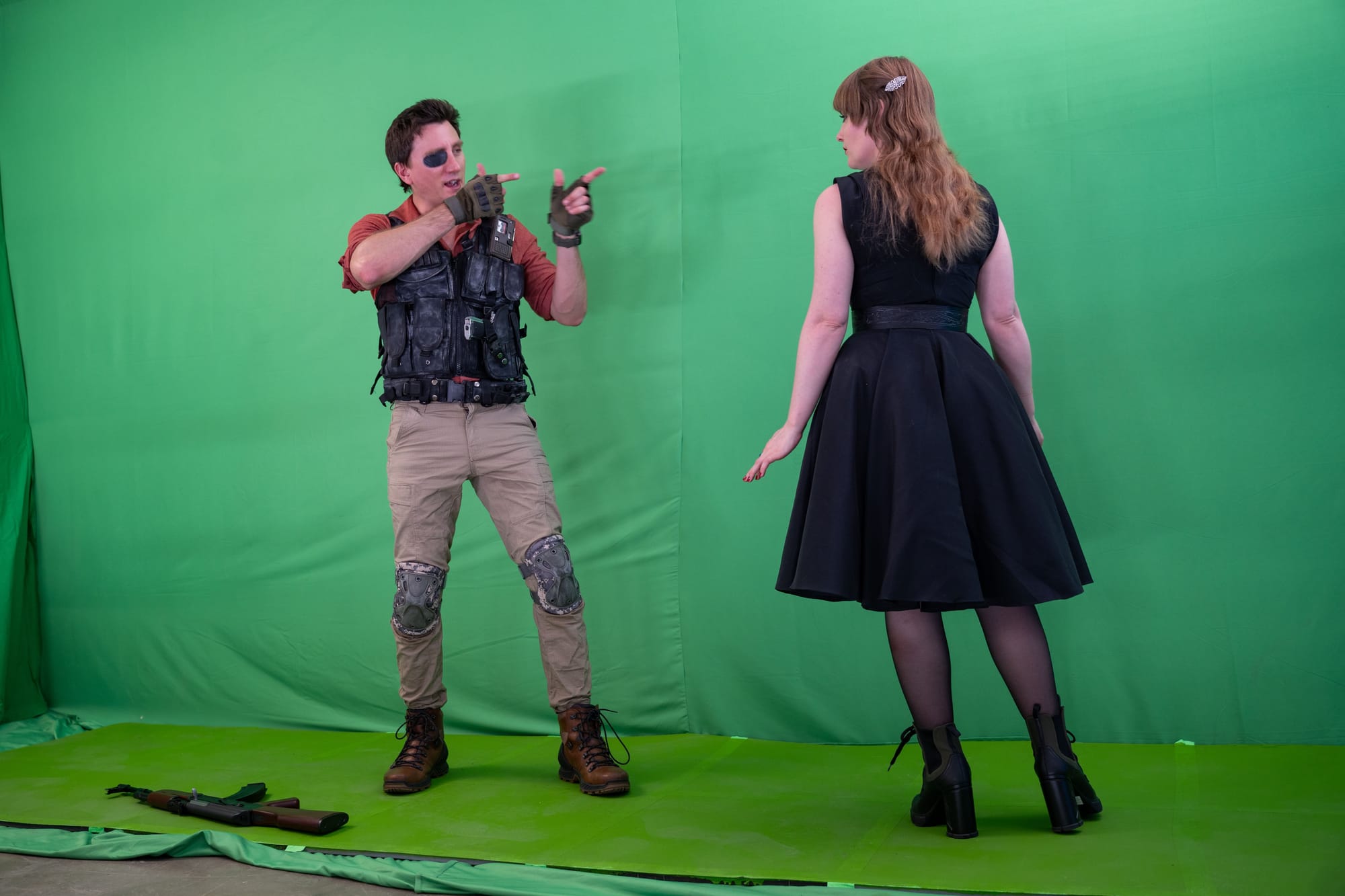
We talked about your background with movies, but games are a big part of your work as well. You’ve made a game, almost all of your movies have something to do with games. Where did all that start for you?
I've always been a massive video game fan. I'm actually more into video games than I am into movies these days. Over the weekend, I saw The Matrix on the big screen. It was like a religious experience. But I go to the theaters maybe five times a year now, which is just ridiculous. I used to go every weekend, no matter what. But now, like any new video game, I'm playing all of them.
I get so much more inspired by video games, there's so much more creativity. Video games are just kicking movies’ ass left and right with how to tell narratives and how to tell new stories and be creative. There's plenty of stories of one or two people going out and making a video game that's a huge hit and they become a millionaire. There are no stories of one person going out and becoming a millionaire off making a movie, because that is throttled. There's so many gatekeepers and holders and doormen between you making that movie and getting it released, and kissing the ring enough to be allowed to be seen like that. It’s impossible. That’s why you’re seeing so much more creativity and video games. You pay $100 and your game is on Steam.
What have you been playing recently?
Recently I’ve been playing Pragmata, which I’ve really been enjoying, and Mouse: P.I. for Hire. If something’s cool or interesting enough, I’ll try it. I’m generally attracted to a cool world and story, or just a fun game.
I think what’s going on with AAA games is like what’s going on with movies now, a lot of sameness. But it’s cool, you have Mouse: P.I. for Hire, these AA games that have big level polish but are still taking chances.. You’d never see a AAA game in 1930s black-and-white animation. It’d be an open world fetch quest nightmare. I think they’re realizing let’s just dial back from the 80-hour grind fest open world. Let’s do a controlled 15-and-under. Our attention spans are so under assault at this point by everything. Do you really expect me to play your game for 80 hours? That’s not going to happen unless you’re Final Fantasy VII or something that I have huge IP roots in.
There are so many of those massive open-world games where after playing for 10 hours I’m like Okay, now the game has finally started. Then I inevitably drop it five hours later.
Yes. By the time they’ve taken the training wheels off, you’re like Man, I’m already kind of burnt out.
What have you been hoping to bring in from the world of games into your movies?
With Waves of Madness and now Castellum of Blood, I’m trying to bring the side-scrolling element. Back when I was playing games like Oxenfree, I was thinking this is really cool, this is an awesome narrative, and it’s sidescrolling the whole time. When things don’t cut, it grabs your attention more every time, whether it’s subconscious or not. When something cuts, that’s when people reach for their phones. So if it doesn’t cut, even if they don’t know why, they’re sticking in there. That’s why I was like it’d be interesting to try a movie like this. We’ve had the one-shot thing, the camera whipping around doing all this stuff. But this is very simple. And I didn’t know if older generations would get it, but they’ve actually responded to this one more than I think any of my other movies, because they see it as a moving play.
Any time you shake up the formula in movies, whenever you shake up how you shoot something, all these people throw their hands up, saying it’s terrible. You have all these critics out there who are screaming for something new, but then if you give them something truly new, they hate it because they have nothing to compare it to. I see this especially with my movies, but with a lot of other people’s movies. They think if it’s different, it means bad. And you’ll see in most of those bad reviews I wish it would have been this, that, or the other thing that’s referencing other movies they like. So you wish this movie was something different, and that upset you. And I feel like in movies, it’s this thing where you can’t change up this algorithm we have with it, but in games, that creativity is worshiped and cherished.
I think the only place in movies, really, where you can get away with doing some really cool, nuanced stuff and people will accept it to a degree is horror, which is also why it’s so popular right now. You can do crazy different things and people will say Oh, okay, it’s a horror movie, we’ll let it get away with doing something different and weird.
Speaking of horror movies, Waves of Madness is inspired by Resident Evil games, and the teaser for Zach Cregger’s upcoming adaptation recently came out. How do you feel about the Resident Evil movies generally?
Oh, man. Obviously, when the first Resident Evil movie came out, I was pretty pissed off at it. I’ve always thought it’s so easy to make a video game movie. You just treat it like you’re adapting a book. It could be that simple. You listen to all these commentaries and interviews of different people who said well, they already played the video game, so they don’t want to see that again. And I’m like Well, we already read Lord of the Rings. That’s the point! We want to see it on screen. Maybe I’m just a crazy fan that way. But I've gotten over that with the old Resident Evil movies. They’re kind of like this guilty pleasure for me now, this alternative universe, batshit anime series. I really enjoy them now.
The worst one for me is Welcome to Raccoon City. That one really seemed to me like you fed the back of the box description and photos of Resident Evil 1 and 2 and threw that into AI and said, Make me a movie. These stories by themselves are all already quite convoluted and big. So we're going to throw them together in a 90 minute movie and think that's gonna work?
The new one, I’m cautiously optimistic. It’s interesting to have, during the Raccoon City incident – if that’s what’s happening in this – just a random guy running through it. I think that could be a cool movie, especially if it’s a one-off, because you can still have tension around if he’s gonna die.
There are also multiple fighting game movies coming out this year. Where do you stand on that sub-genre’s history?
I love Mortal Kombat, obviously. I grew up on the sets of the first two, because my dad did effects on those. I’ve been playing those games forever with my brother and sister. The [2021] Mortal Kombat, I saw it once with a few drinks during the pandemic, so it’s cloudy. I remember the opening sequence with Scorpion and thinking Oh, this is actually pretty cool. Here we go. And then there’s this random new character and it kind of unraveled from there for me. I’m like, wait a second, we made a whole movie about Mortal Kombat, and there is no Mortal Kombat? Where’s the tournament?
The second one looks like they figured all this out, and they’re going to the tournament. I’m cautiously optimistic about that, because Karl Urban as Johnny Cage sounds fun. The new Street Fighter, I like that they’re going batshit with it and making it like an anime, because it should be. I actually have a pretty soft spot for the original Street Fighter movie, just because Van Damme is so coked up and crazy. That whole movie is just like a crazy fever dream cartoon, and that’s what Street Fighter should be.
Back to your work, what have you taken from the reception to Waves of Madness going forward?
How do I not just do the same thing again in the same world? So it's upgrading the whole thing. The first one was like a Resident Evil, slow-burny tour. [Castellum of Blood] is much more of an action movie. The other one had cutaways and things. This one's just 70 minutes of action start to finish. It goes and goes and goes. It's what I think a Castlevania movie would be. A lot of other people could disagree with me, but anyone who loves Symphony of the Night will probably get a kick out of it.
Where are you at in the process, and when can people expect Castellum of Blood?
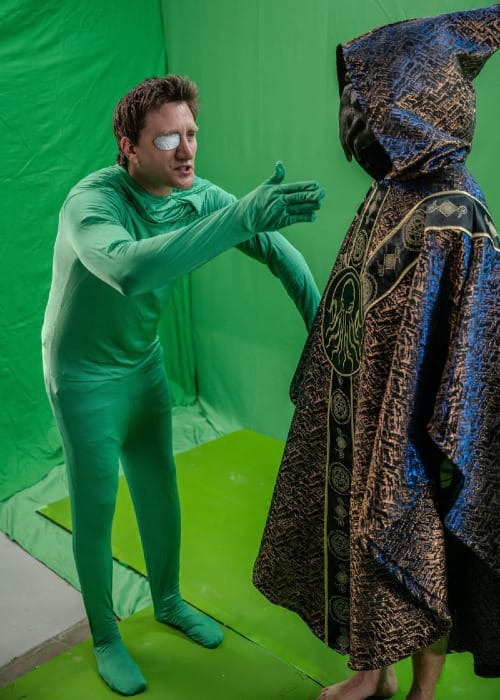
I'm trying to get it out by the end of the year, but these things take time. I'm finishing building the monsters either this week or next week. By finishing the monsters, I mean I have all the plates, and then I have to get the backgrounds built around them. Then I'm gonna shoot the human stuff with the actors in July and I'll start putting it all together. We did a fundraiser where there was a season pass deal where people get to see a chapter at a time, which will be roughly 10 minutes once a month. So I'm trying to get the first one of those out in August, and each is going to be accompanied by the making of how I did that chapter. Pending, you know, the world isn't, like, blown up or anything. I’m trying to just keep the noise of the world out.
The world continues to resemble one of your movies more and more, and I don’t really know how to feel about that.
That’s why I’m down here on my island Australia, putting my head in the sand.

Jason Trost recommends: Exit 8 (game + movie)
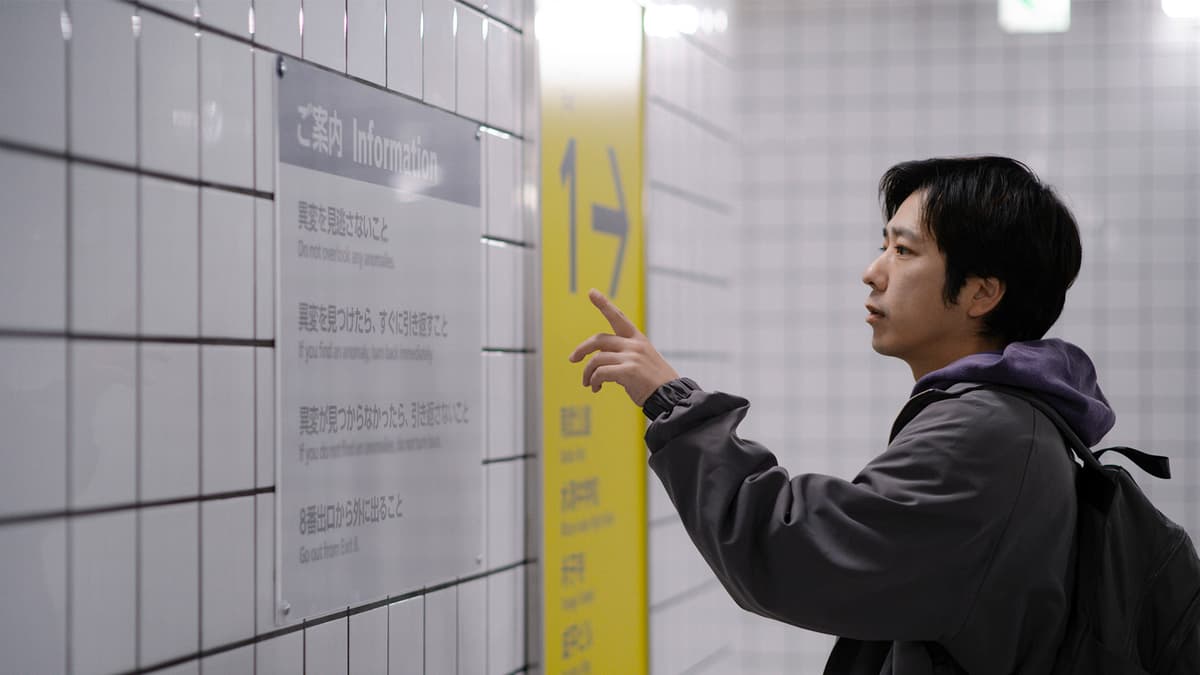
The game takes like 20 minutes, give it a shot. It's fun to play with friends. You have to keep walking down this exit platform hallway, and it's always the same, but a little bit different. It's the same. You keep going, it’s a little bit different. You get a run back. And I was like, how are they gonna do this in the movie? And I thought they did a really cool job with it. It felt more like a Silent Hill movie to a degree than I think the Silent Hill movies did. It’s a good foreign film. It’s a good video game adaptation. And if you like Silent Hill, it hits the beats.